




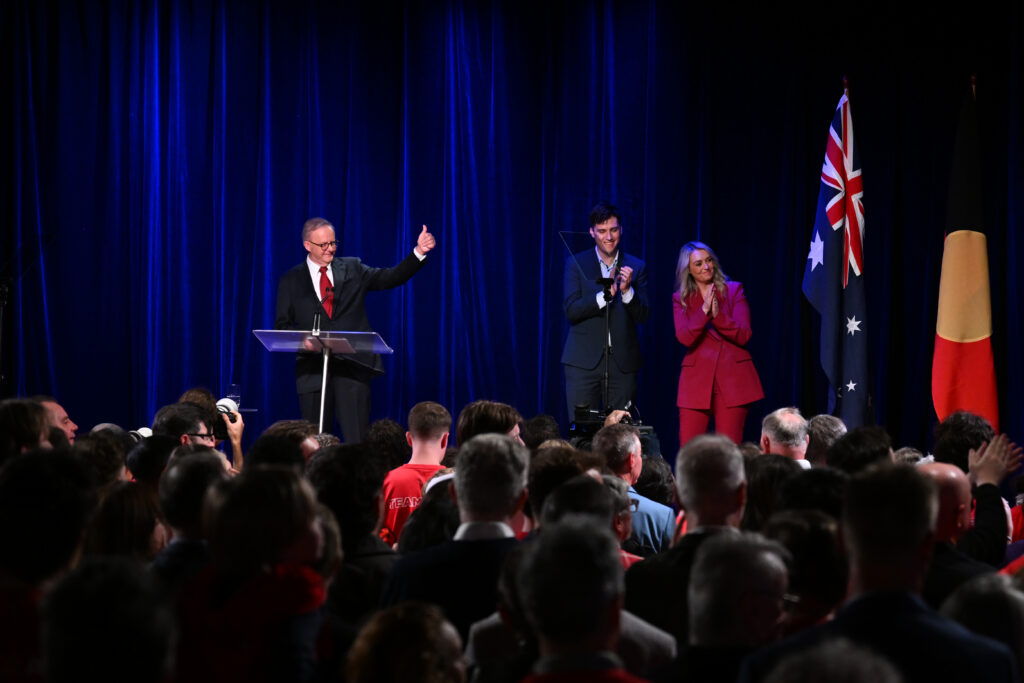
Quite a lot, it turns out.
Anthony Albanese became Australia’s 31st Prime Minister on 23 May 2022. He was re-elected three years later with a substantially increased majority.
Since taking office, his Labor government has introduced significant changes across the economy, Medicare, wages, housing, education, climate policy, industry and Australia’s international relationships.
In the wake of COVID-19, cost-of-living issues have gripped the planet, with Australia no exception.
Mr Albanese’ s government introduced income tax cuts for all Australian taxpayers, including changes that benefited low- and middle-income earners. This compared to the planned cuts of his Coalition opponents in 2022, who planned to only cut taxes for higher income earners. He introduced additional tax relief scheduled across 2026 and 2027.
The Febderal Labor Government also delivered household electricity bill rebates to help offset rising energy costs, devised measures to improve competition and address supermarket and petrol price gouging and increased Commonwealth Rent Assistance for eligible low-income renters. In addition, they expanded the single-parent payment, helping around 97,000 additional or newly eligible parents.
Introduced by Bob Hawke in the 1980s, Medicare has been a populat Labor initiative. Me Albanese has expanded Medicare’s bulk-billing incentives to encourage more GPs to offer free consultations. He ahs also increased funding for Medicare, with a target of millions of additional bulk-billed GP visits and reduced the maximum cost of many PBS prescriptions to $25.
Labor has improved access to cheaper medicines, including treatments for serious illnesses such as cancer, and established Medicare Urgent Care Clinics to provide free urgent medical treatment without requiring a hospital emergency department visit.
Labor has also increased funding for public hospitals and introduced reforms to improve access to aged care and support older Australians.
In the face of rising housing costs, Mr Albanese established the $10 billion Housing Australia Future Fund to support social and affordable housing. The Federal Government also expanded the First Home Guarantee, allowing eligible first-home buyers to purchase with a 5 per cent deposit without paying lenders’ mortgage insurance.
In addition to more Commonwealth Rent Assistance, the Federal Government also introduced the Help to Buy shared-equity scheme to help eligible buyers enter the housing market.
Renter’s rights have been improved, including working with states and territories to restrict no-grounds evictions.
After a decades-long slump, there is increased investment in social and affordable housing.
Labor has supported successive increases in the national minimum wage, delivered significant wage increases for aged-care workers and early childhood education workers.
Workers now have Right to Disconnect legislation, giving them protections against unreasonable after-hours work contact.
Intentional wage theft is now a criminal offence, while casual workers have stronger protections. Labor introduced “Same Job, Same Pay” rules for labour hire.
The wage gap for women is at its lowest point ever, and there has been legislation passed to improve gender pay transparency.
In July 2026, workers now are protected by payday super legislation to curb unpaid super.
Students received a 20 per cent reduction in student HELP and HECS debts, benefiting approximately three million Australians. Labor changed student loan indexation so debts cannot increase faster than wages.
Mr Albanese invested in the National Skills Agreement and moved to make Fee-Free TAFE permanent, funded hundreds of thousands of free vocational education places, then announced AI Standards legislation with a dedicated AI regulator.
The Government also introduced financial assistance for eligible teaching, nursing, midwifery and social work students undertaking compulsory placements, introduced additional support for apprentices in the construction industry, and increased funding commitments to bring public schools towards full and fair funding.
Childcare costs for eligible families have been reduced through changes to the Child Care Subsidy, with a guarantee of three days of subsidised early childhood education and care for eligible families.
Government-funded paid parental leave now sits at 26 weeks, with introduced superannuation payments on government-funded paid parental leave. There is more financial assistance for single parents.
Australia’s 2050 net-zero emissions target has been set in legislation. A 43 per cent emissions reduction target is in place for 2030, with a more ambitious 2035 emissions reduction target of 62–70 per cent below 2005 levels.
There has been significant approved investments in solar, wind and battery storage, with a target of 82 per cent renewable electricity by 2030. This will be aided by the Cheaper Home Batteries Program to encourage household battery installations.
There is more funding to protect the Great Barrier Reef, expanded marine conservation and environmental protection, and a national Environment Protection Agency.
The Government established the $15 billion National Reconstruction Fund to support Australian manufacturing and strategic industries and introduced the Future Made in Australia policy to encourage investment in domestic manufacturing, renewable energy and critical minerals.
There has been increased investment in Australian-made solar panels, batteries and clean energy technologies and more support for Australia’s critical minerals industry.
The trade relationship with China, which was badly damaged under Scott Morrison, has improved, helping restore access for several Australian exports that had faced trade restrictions.
Mr Albanese has strengthened Australia’s security relationship with the United States and United Kingdom and with Pacific Island nations, which were also at a low point under Mr Morrison.
Labor secured the Australia–United Kingdom Free Trade Agreement’s implementation and advanced negotiations towards an Australia–European Union trade agreement.
Mr Albanese set up Australia’s first National Anti-Corruption Commission, and introduced stronger transparency and accountability measures in federal government. He also strengthened protections for whistleblowers and public-sector integrity.










 The Public Service Association of NSW and Community and Public Sector Union (SPSF Group) NSW Branch acknowledges the Traditional Custodians of the lands where we work and the places in which we live. We pay respect to Ancestors and Elders, past, present and future. We recognise the unique cultural and spiritual relationship and celebrate the contributions of first nations peoples to Australia.

Leave a Comment
Your email address will not be published. Required fields are marked with *