




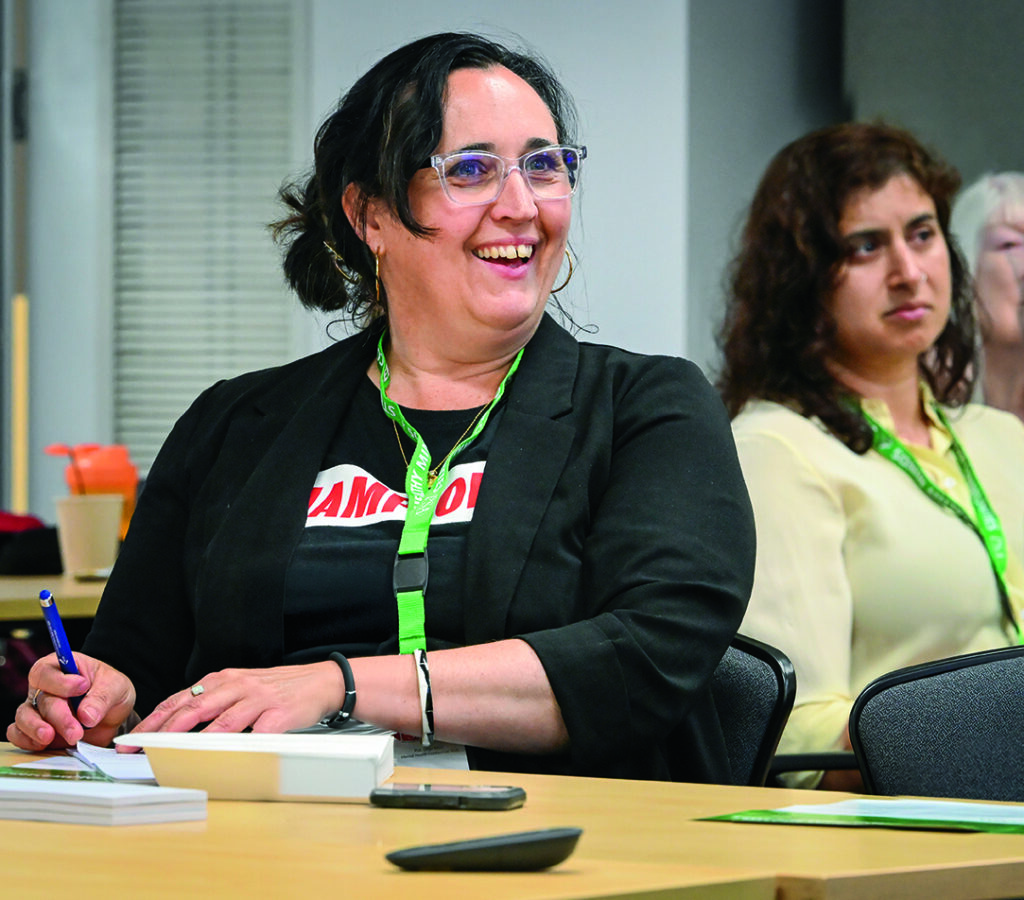
Mental health conference takes place at PSA House.
Attendees at the third PSA CPSU NSW Mental Health Conference heard Acknowledgement of Country by Organiser Monique Anderson.
Union President Nicole Jess spoke to attendees, reminding them “the wellbeing of our minds is not just a personal matter: it is a collective responsibility” and that the work they did helped create “healthier, more resilient communities”.

Ms Jess said it was important that compassion was at the heart of leadership and that attendees needed to take the information from the day back to their workplaces.
The state minister for Mental Health, Rose Jackson, was the first guest. While acknowledging country, she admitted there was “unfinished business” regarding Aboriginal mental health in Australia.
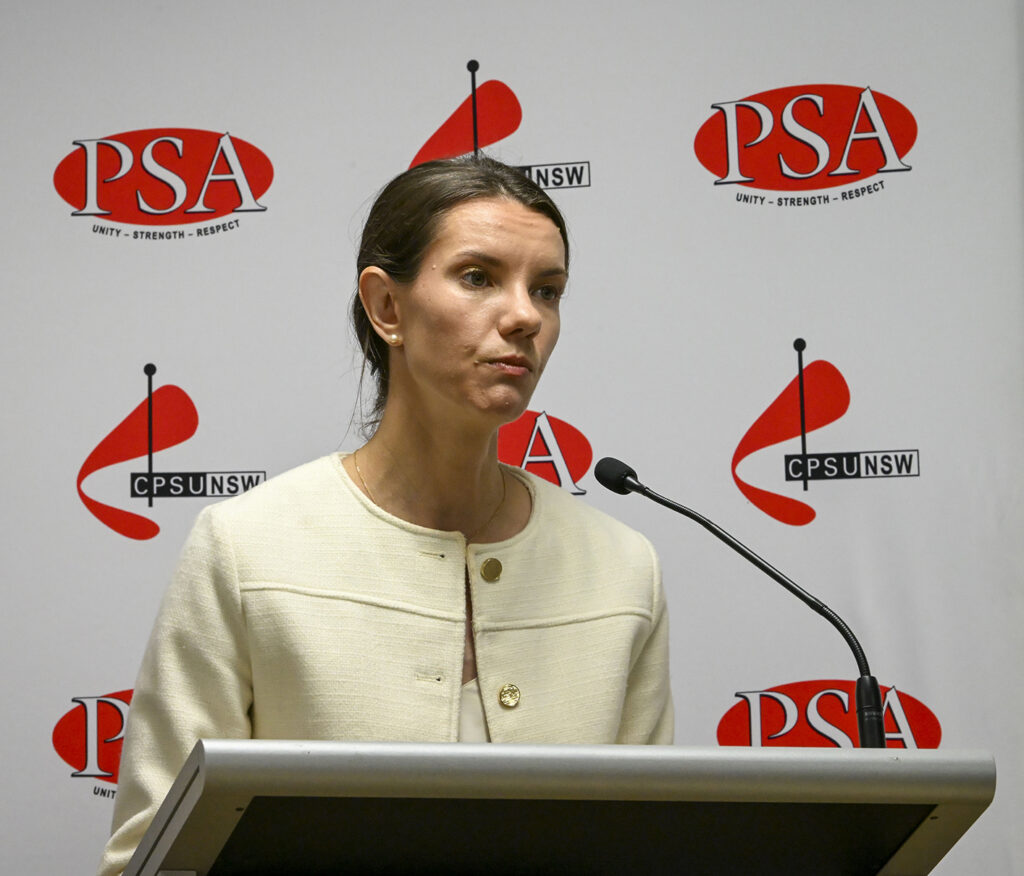
Ms Jackson said the attendees in their workplaces often met clients who “are experiencing the worst day of their lives”, and therefore played an important role in protecting mental health of the people coming for assistance. However, she urged PSA CPSU NSW members to look after their own mental health, as “you can’t bring best practice with your interaction with the public” with your own mental health issues. She used the analogy of an airport safety demonstration: “put on your own oxygen mask first before helping anyone else”.
She also spruiked the State Government’s suicide prevention laws, whereby agencies are now legally compelled to ensure policies take into account the possibility of suicide when they are being drawn up.
“We have put the framework in place for you to say, ‘My agency is not doing this’,” she said.
PSA CPSU NSW General Secretary Stewart Little talked about the strain of wage caps, the efficiency dividend and its accompanying job cuts on staff in the past. He said current issues, such as Art Gallery staff cuts, will also have an effect on the mental wellbeing of workers.
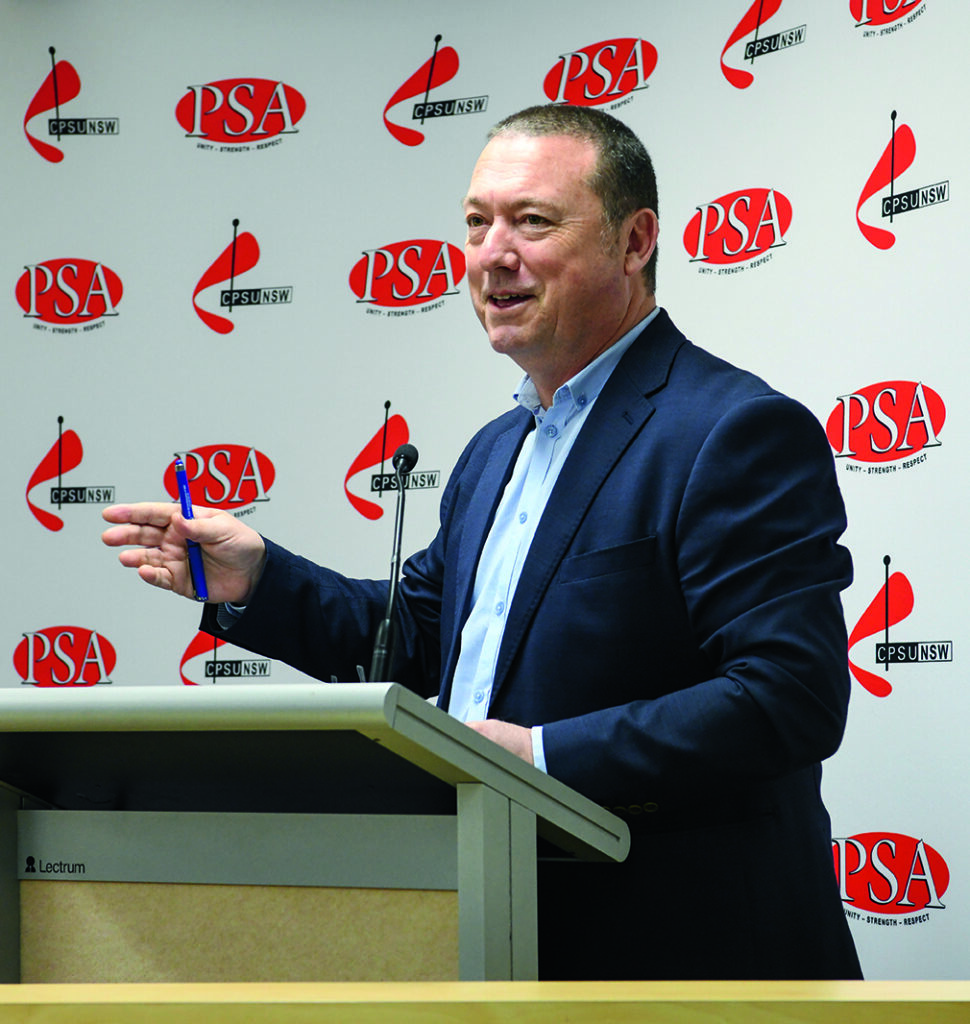
“That day-to-day stress that people often don’t think about has a big effect on you,” he said.
Mr Little said the return-to-work percentages of those with mental health issues “has to get better”.
“A cornerstone of our last wages agreement was redeployment,” he said. “We’ve gotten injured workers back into the workplace right across the public sector.” He then encouraged attendees to think about how an injured worker could be brought into their team.
Arif Ongu of the University of Technology Sydney (UTS) talked about wellbeing and what contributes to it. He urged members of the audience to write down “things that make you feel safe, strong and resilient”.
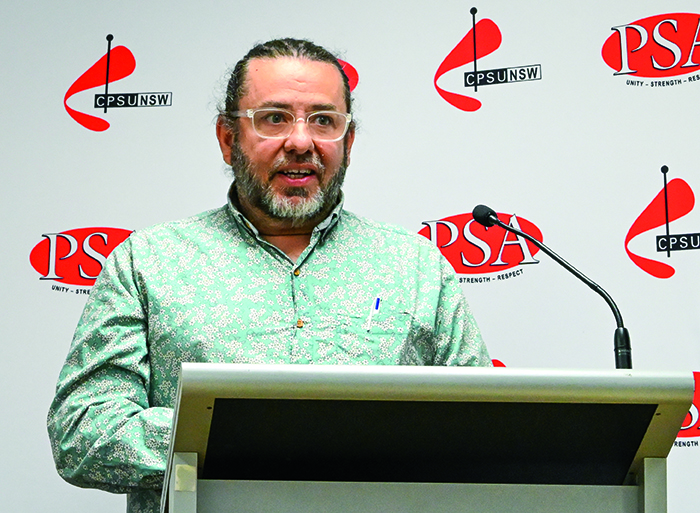
“When we are not feeling well, it’s important to remember these things,” he said. “Often people think of mental wellbeing as people avoiding feeling bad and feeling low. But sometimes those feelings need to be there.”
He instead urged people to better manage feeling low. He added even anxiety and stress can be used to people’s advantage.
“We work, do things and meet deadlines because we are anxious,” he said. “However, stress can become hindering and demotivating.
“You can’t control things that trigger stress, but you can control how your thoughts react to stress. We create the harm when we experience the negative impacts of stress.”
He recommended people identify the area where they have control and focus on that to achieve a helpful outcome.
“Rigid thinking is the thing that does the most damage,” he said. “What is resilience? We often think about it as the ability to recover, bounce back and bring yourself back on track after being derailed.”
However, Mr Ongu warned that resilience can be used to shift responsibility onto victims.
He added taking care of physical wellbeing will also have a positive effect on your mental state.
Former rugby league player and coach Matt Elliott discussed self-regulation with the attendees. He said people can hear in their head “your tormentor or mentor”.
“Are you spending mental energy on your tormentor?” he asked. “Energy, not time, is our most precious resource.”
He suggested strategies such as checking in on your mental wellbeing and concentrating on positives such as “joy and social connections”.
Liam O’Dwyer from SafeWork NSW talked about his employer’s efforts for the “non-negotiable” issue of workplace safety and discussed new legislation to protect workers. He praised the Australian union movement for its campaigning for increased workplace safety powers, such as better access to worksites for safety representatives.
“SafeWork is doing a lot of collaboration in NSW,” he said, and added the PSA CPSU NSW Health and Safety Officer, Marko Petrovic, was part of the consultative process “to resolve safety issues in the workplace”.
Assistant General Secretary Troy Wright backed up Mr O’Dwyer’s argument, saying union pressure that has “unleashed the powers of SafeWork”.
PSA CPSU NSW Digital and Marketing Officer John McLoughlin has a degree in Human Movement Science, so presented a talk on physical activity and its effect on mental health, something he said needed to be destigmatised.
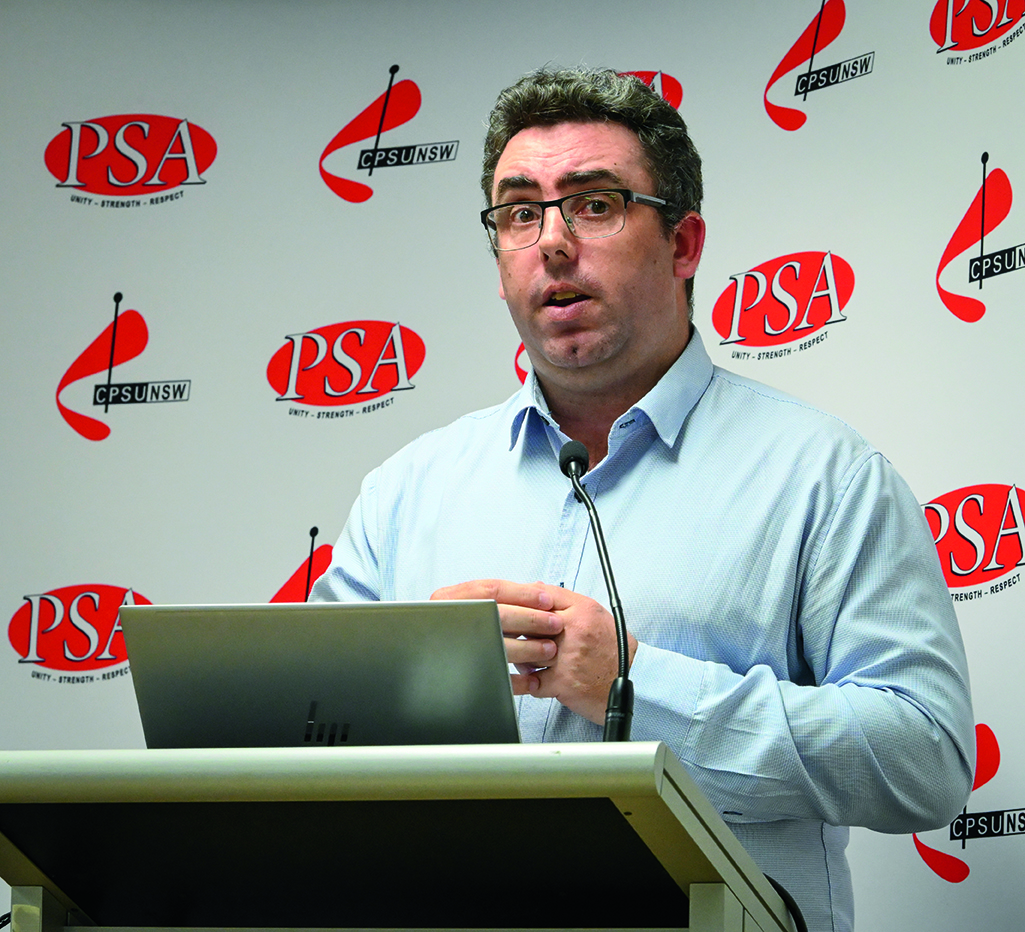
Mr McLoughlin said physical activity improved not only physical health but improved social connections and helped take on mental health issues which cost the global economy $5 trillion a year.
“We’re in a crisis, but we are getting better at dealing with a crisis,” he said.
Mr McLoughlin said when it comes to mental health, it doesn’t take much to go from flourishing, to moderate, to a place “when you really don’t want to go to work”. However, he recommended physical activity helps serotonin levels and dopamine, citing post-COVID studies that showed a “downward spiral” of physical activity had effects on mental health.
Mr McLoughlin said older adults still needed to exercise, as “physical activity boosted morale and mental health” by more than two levels.
“Every worker is affected by workplace mental health,” said Liam O’Brien of the Australian Council of Trade Unions (ACTU), who talked about the impacts of work on some people’s mental health and their right to a safe and healthy working environment.
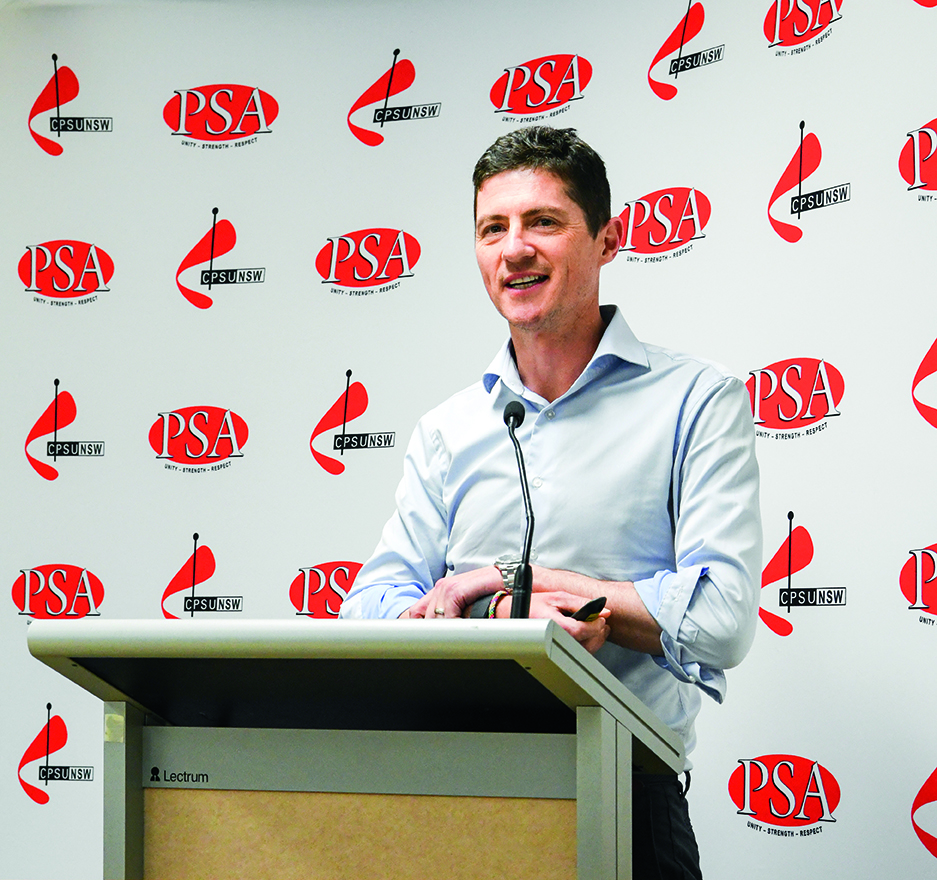
“Work is good for your health,” he said. “But also work can be so hazardous it can lead to death. Every year about 200 people a year die at work in Australian workplaces.”
Mr O’Brien said women were more likely to suffer psychological injuries, while men more likely to encounter physical health issues.
He said many of the issues unions and the ACTU fought for would improve workers’ mental health. He said workers picking up slack of worker shortages, caused mental health issues, as did the strain of working in an insecure role or badly done change management.
“We know where there are Health and Safety Representatives [HSRs], there are improvements in employer compliance,” he said. “Where you have HSRs in the workplace, the employer is more likely to take mental health in the workplace seriously.”
Mr O’Brien warned workers’ compensation “is not meeting its purpose” said too many people did not even bother applying for compensation as they don’t think they will get the results they require.
The day ended with Chloe McCardel, who has swum across the English Channel 44 times. In addition to the challenges of cold, tides and dodging shipping, she discussed the importance of “surrounding yourself with supportive people”.
After the event, Mr Little said the conference showed that “unions such as ours are at the forefront of the fight against mental health issues in the workplace”.
Ms Jess said she hoped attendees left the conference with new-found skills to help their fellow members “negotiate our often perilous worksites”.








 The Public Service Association of NSW and Community and Public Sector Union (SPSF Group) NSW Branch acknowledges the Traditional Custodians of the lands where we work and the places in which we live. We pay respect to Ancestors and Elders, past, present and future. We recognise the unique cultural and spiritual relationship and celebrate the contributions of first nations peoples to Australia.
Leave a Comment
Your email address will not be published. Required fields are marked with *