





NSW needs to build more public housing. And it needs to build housing that essential public sector workers can actually afford.
For decades, public housing in Australia has increasingly been treated as a safety net: something reserved for people who have fallen furthest through the cracks of the private housing market.
And as governments retreat from building public homes, that approach is no longer enough as housing affordability becomes a workforce issue all over NSW. This looming crisis affects whether public sector workers can afford to live near their workplaces, whether they can remain in the communities they serve, whether they can start families, whether they can leave unsafe relationships and whether they can look towards retirement without the fear of housing insecurity.
The evidence from the PSA CPSU NSW’s 2026 Housing Affordability Survey is stark.
More than 5000 PSA CPSU NSW members responded to the survey, providing a picture of housing stress among the people who deliver essential public services across NSW. The survey found that 65.5 per cent of respondents answering the relevant question were spending more than 30 per cent of their income on rent or mortgage payments, which is the figure used in the report for housing stress. More than four in 10 described their housing as unaffordable or very unaffordable.
These aren’t abstract statistics. PSA CPSU NSW members are among the army of public sector workers who keep NSW functioning.
And increasingly, these are people who work full-time, contribute to their communities and pay their taxes, still cannot secure a home they can afford.
“That should concern every NSW Government,” said PSA CPSU NSW General Secretary Stewart Little, himself a product of a childhood in public housing. “The idea that housing affordability is only a problem for people on the lowest incomes is increasingly disconnected from reality.
“Our survey found that 44 per cent of respondents experiencing housing costs above 30 per cent of their income earned between $70,000 and $110,000.
“In other words, a person can earn what might once have been considered a solid income and still find themselves under serious housing pressure.”
For renters, the situation is particularly difficult.
Thirty-seven per cent of survey respondents were private renters. Among the 1872 renters who answered whether they expected ever to own a home, 66 per cent said they did not expect to do so.
Almost one quarter of respondents said they did not feel secure in their housing, while four respondents reported that they were homeless while working.
“These figures challenge an old assumption: that if you have a job, you will eventually be able to secure a home,” said Mr Little. “For many public sector workers, that promise is simply no longer holding.
“The system is letting these hard-working people down. Housing stress isn’t simply about having less money left over at the end of the month. It can determine whether people eat properly, whether they see a doctor and whether they can afford essential services.”
The PSA CPSU NSW survey found that 42.4 per cent of respondents said housing costs had caused them to miss meals or delay or avoid medical or dental care.
“That is a profound warning,” said Mr Little. “A worker shouldn’t have to choose between paying the rent and visiting the dentist. A parent shouldn’t have to decide whether the family grocery bill can stretch far enough after the mortgage or rent has been paid.”
As pointed out in the PSA CPSU NSW’s DV Needs Public Services campaign, too often people have to remain in an unsafe relationship because they cannot afford somewhere else to live.
The housing survey identified 62 members living with an abusive partner, 47 of whom said they could not afford to leave.
“Housing is therefore not just about bricks and mortar,” said PSA CPSU NSW Women’s Industrial Officer Simone Scalmer. “It is about security, safety, health and dignity.”
The NSW Government relies on a workforce that is distributed across the state.
Members are found in regional schools, courts and correctional facilities, service centres and government offices. Often these communities affected by natural disasters and in the many places where government services are delivered every day.
“Those workers need to live somewhere,” said Mr Little. “If housing becomes unaffordable in the communities where essential workers are needed, the consequences extend beyond individual households.
“Recruitment becomes harder. Retention becomes harder. Workers can be pushed further away from their workplaces, increasing commuting times and costs.
“And communities can find themselves increasingly dependent on workers who cannot afford to live in them.”
Mr Little said housing should be considered part of NSW’s essential infrastructure, spoken in the same terms as roads, schools and hospitals.
Consensus across the political spectrum is that NSW needs more homes and that increasing housing supply will alleviate spiralling costs. However, the PSA CPSU NSW’s housing recommendations make an important distinction: building more private housing alone will not solve the affordability problem.
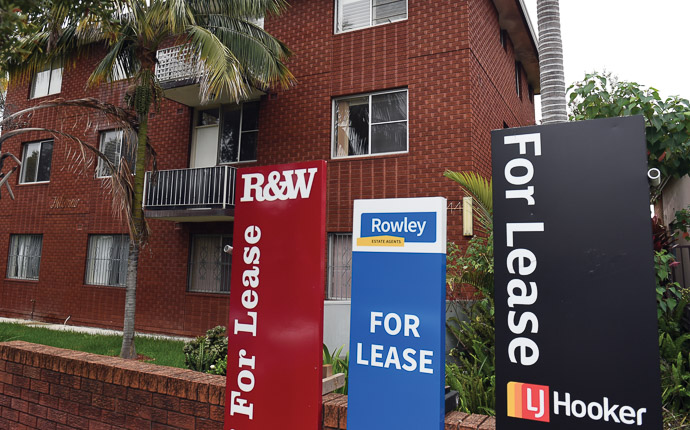
“A home can be approved without being affordable,” said Mr Little. “A development can add hundreds of dwellings to the planning pipeline without putting an affordable home within reach of a public sector worker.
“And a new apartment can be built while rents in the surrounding area remain beyond the means of the people who need to live there.
“Our union is therefore calling for a fundamental change in the way governments think about housing. Rather than simply helping people compete in the private market, government should build and retain a much larger stock of permanently affordable homes.
That means treating public housing as a permanent part of the housing system, not as a small residual sector reserved for people who have nowhere else to go and have fallen through the cracks.
“Public housing should not be regarded as the home of last resort,” said Mr Little.
Among proposals in the PSA CPSU NSW’s recommendations is to broaden the idea of who public and affordable housing is aimed at. The report urges the gap between traditional social housing and the private market to be changed, with full-time essential workers considered part of who is eligible for a public home.
“As it stands, a worker can earn too much to qualify for conventional social housing while simultaneously earning too little to comfortably afford private housing,” said Mr Little. “That gap is where many essential public sector workers now find themselves.”
The PSA CPSU NSW proposes expanding eligibility for essential-worker housing to public sector workers who spend more than 30 per cent of their income on private rent. It also supports mixed-tenure developments that combine public housing, affordable or key-worker housing and private housing.
“This is important because public housing doesn’t need to mean a building occupied exclusively by people on the lowest incomes,” said Mr Little. “A modern public housing system can include schools staff, corrections officers, child protection workers, administrative officers and other essential workers alongside households requiring traditional social housing.
“That approach can create more diverse communities while making public housing a normal part of the housing system.”
The PSA is calling for a substantial increase in the amount of public housing in NSW.
Its recommendation is for public housing to reach 6 per cent of NSW’s housing stock in the medium term, rising to 10 per cent in the longer term.
To help achieve that, the PSA proposes an additional $2 billion a year from the NSW Government until the 10 per cent target is reached.
This is not as radical an idea as it may seem in a world where governments, both left and right, took a step back from participating in economies in the 1980s and 1990s. In Sydney’s southeast, for example, streets are named after battlegrounds in France because these suburbs were built by the government for returning soldiers.
Yet in recent decades, public housing has represented an increasingly small proportion of the overall housing system. Therefore, a small increase in the number of public homes will do little to address the scale of the problem facing workers and families.
“Our position is that NSW needs to build a permanent housing asset,” said Mr Little. “The government should not simply spend money helping households pay increasingly expensive rents to private landlords. It should also invest in housing that remains in public or non-profit ownership and continues to provide affordable homes over decades.”
One of the simplest opportunities available to governments is land they already own. The PSA CPSU NSW is calling for surplus government land to be prioritised for public and affordable housing rather than routinely sold to developers.
The union also proposes keeping land in government ownership where possible, using long-term leases rather than selling land outright, and making surplus public land available below market value where appropriate.
“This matters because land is one of the largest costs in housing, particularly in high-value areas,” said Mr Little. “If government already owns the land, it does not necessarily need to sell that asset and then attempt to buy it back indirectly through housing subsidies.
“Instead, it can use the land to create a long-term public asset. A government-owned block of land can support affordable housing for generation after generation.
“Once sold, it is gone.”
The PSA also proposes trialling cost-based rental housing. Where private rents are ultimately determined by what the market can charge.
Cost-based housing starts from a different question: what does it actually cost to provide, finance, maintain and renew this home over the long term?
The PSA proposes using surplus public land and low-interest Commonwealth financing to test this model.
NSW does not have to invent this idea from scratch. It can look overseas, often to quite wealthy countries, and look at how other jurisdictions have developed much larger non-market housing sectors.
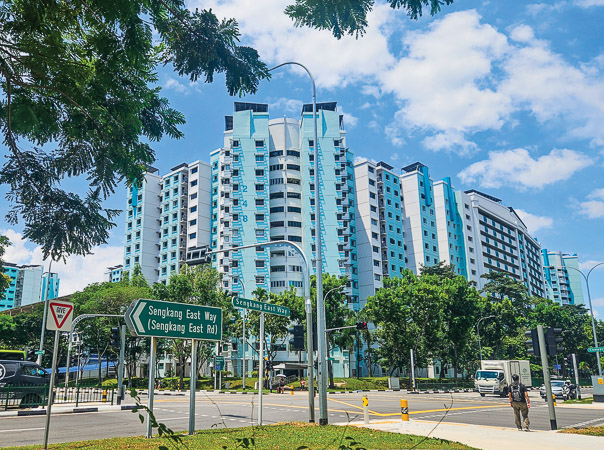
Singapore, which is a services-based economic powerhouse in the region, has about 80 per cent of its citizens in high-quality public homes.
Vienna is often held up as the world’s most liveable major city. It also has a large municipal housing sector alongside limited-profit housing associations. The Netherlands has a substantial housing-association sector, while Denmark has a significant non-profit social housing sector.
“These systems differ from one another, and none can simply be copied into NSW,” said Mr Little. “But they demonstrate an important principle: public or non-profit housing does not have to be a tiny welfare sector.
“It can be a major part of the housing market and our recommendations draw on this broader idea of housing as a permanent public or community asset.
“The economic logic is straightforward; the State Government can contribute land and borrow at comparatively favourable rates. It can build at scale, using standardised designs and procurement.
“It can retain ownership. And it can spread the cost of a building over the many decades during which that building provides housing.
“The result is an asset rather than simply a one-off expenditure.
The result is also workers with roofs over their heads.”
The PSA CPSU NSW has also proposed investigating a public modular and prefabricated housing factory, alongside pre-approved designs for prefabricated housing, to lower costs.
“The housing crisis also raises a question about what kind of public service NSW wants in the future,” said Mr Little. “A government can advertise jobs. It can train workers and offer career pathways.
“But if those workers cannot afford to live within a reasonable distance of where they are required to work, recruitment and retention become increasingly difficult. Housing therefore belongs in workforce planning.
“When governments plan a new hospital, school, correctional facility or public service hub, housing should be part of the conversation.”
The PSA CPSU NSW survey places particular emphasis on women over 45 and the growing number of single older women approaching retirement without home ownership or secure affordable rental housing.
For a public sector worker who has rented throughout their career, retirement can fundamentally change the housing equation. A person may have had a reliable wage and a stable career but still reach their 50s or 60s without the asset that comes with home ownership. If rent continues to consume a large share of income, retirement savings have to stretch further.
The PSA therefore recommends specific measures for older workers, including a dedicated social-housing eligibility category for people aged 55 and over and discounted government loans for public sector workers, including workers over 45.
Mr Little said public housing can help create cohesive communities.
“When essential workers can afford to live in the communities they serve, they are more likely to be able to put down roots,” he said. “They can participate in local life, with their children attending local schools.
“They can contribute to community organisations, spend money in local businesses and remain connected to the people and places their work supports.”
Conversely, when workers are pushed further and further away by housing costs, communities become more transient, and commuting becomes more burdensome. The survey found some members undergoing gruelling commutes, including one worker travelling between Newcastle and Sydney.
“The PSA CPSU NSW is not arguing against private development,” said Mr Little. “We need to support simpler planning processes, more gentle density, three-storey townhouses and apartments on residential land, a townhouse development code and the removal of unnecessarily restrictive planning rules.”
A larger supply of private housing can help increase choice and accommodate population growth.
PSA CPSU NSW members in areas such as Planning or the Sydney Olympic Park Authority are working to open up more housing opportunities.
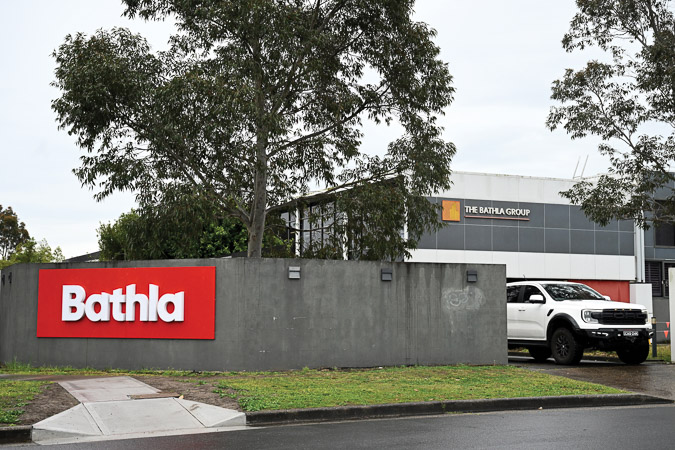
However, the collapse of the Bathla Group showed there are challenges for private companies trying to build affordable housing.
“At the heart of the PSA’s recommendations is a question about the role of government,” said Mr Little. “For too long, housing policy has often focused on helping people survive an expensive housing market.
“The alternative is to change the housing market itself by ensuring that a substantial part of the housing stock is outside it.
“That does not mean abolishing private housing, it means recognising that a healthy housing system can contain different forms of ownership.
“If NSW wants a strong public service, it needs to build a place for public servants to live.”








 The Public Service Association of NSW and Community and Public Sector Union (SPSF Group) NSW Branch acknowledges the Traditional Custodians of the lands where we work and the places in which we live. We pay respect to Ancestors and Elders, past, present and future. We recognise the unique cultural and spiritual relationship and celebrate the contributions of first nations peoples to Australia.

Leave a Comment
Your email address will not be published. Required fields are marked with *