




Four instances of violence. Four families facing unimaginable grief.
In late September, in the space of just 24 hours, three women aged 23, 70 and 90 were killed in separate domestic and family violence-related incidents across NSW.
Two were allegedly stabbed in their homes, while the third was found dead at a property in the state’s north. Police have charged men over all three deaths. In the Blue Mountains, a woman was charged with killing two of her children.
The circumstances of each case are different. It would be wrong to pretend three tragedies can be reduced to a single explanation. But together, they should force a difficult question for the NSW government: what more can the state do to protect people from domestic violence?
The answer cannot simply be another statement of shock after someone dies.
NSW has already introduced significant reforms. Following the murder of Molly Ticehurst, for example, bail laws were strengthened and electronic monitoring introduced for certain serious domestic violence offences. Yet her death continues to raise questions about whether the systems designed to protect women are working as they should.
Those questions matter because domestic violence rarely begins with murder. There are warning signs: threats, coercive control, stalking, intimidation, breaches of orders, escalating violence and repeated contact with police or support services.
The State Government needs to be at the centre of the solution, as demanded by our DV Needs Public Services campaign.
That means properly funding frontline domestic violence services, ensuring women can access safe accommodation quickly, strengthening risk assessment and information-sharing between police and support agencies, and ensuring breaches of protection orders are treated with the seriousness they deserve.
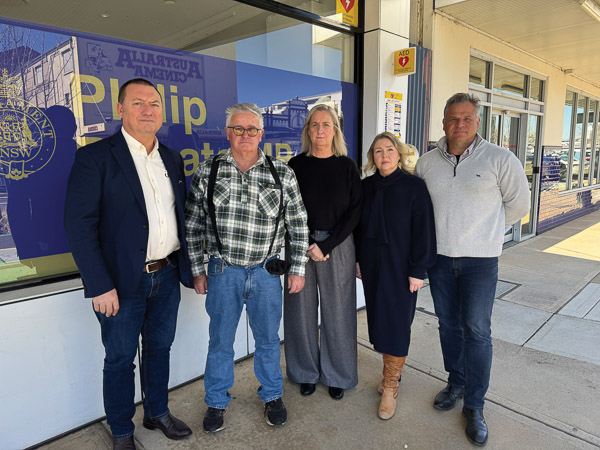
General Secretary Stewart Little and I recently had the opportunity to meet Tony Ticehurst and his local MP, Phil Donato, in Orange.
Tony’s daughter, Molly Ticehurst, was murdered by her former partner in April 2024. This month, he was sentenced to 28 years in prison.
Before her murder, Molly had been promised security upgrades to make her home safer. The work was to be carried out by a non-government organisation delivering a NSW Government-funded domestic violence program.
But the work was never completed.
As Tony said: “She’s still waiting for them to show up.”
The same weekend as the four events, a non-government domestic violence service in Wollongong closed a waitlist due to funding issues, proving once again that a government-run service needs to be available in all parts of NSW.
The NSW Government cannot prevent every act of violence. Nor can legislation alone change the attitudes and behaviours that underpin domestic and family violence.
But the State Government does have enormous power to determine whether a woman fleeing violence can find somewhere safe, whether police have the resources and information to recognise escalating danger, whether perpetrators face meaningful consequences for breaching orders, and whether agencies learn from cases in which the system fails.
Five murders in one weekend should not become another grim statistic that dominates the news for a few days before attention moves elsewhere.
It should be a catalyst for action.
The families of these women and children cannot bring them back. But the NSW Government can decide that their deaths demand more than condolences.
They demand scrutiny, investment, accountability and prevention.
Five people dead in one weekend is a tragedy. The question now is what our state does with it.









 The Public Service Association of NSW and Community and Public Sector Union (SPSF Group) NSW Branch acknowledges the Traditional Custodians of the lands where we work and the places in which we live. We pay respect to Ancestors and Elders, past, present and future. We recognise the unique cultural and spiritual relationship and celebrate the contributions of first nations peoples to Australia.

Leave a Comment
Your email address will not be published. Required fields are marked with *