




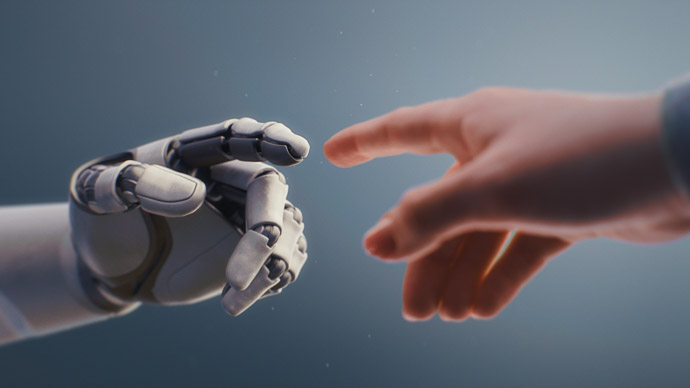
It is too early for employers and unions to truly understand what AI will do to workplaces.
Industrial relations conferences can be a grind because of the polarisation of the sector. Attend a union-dominated one and the collective groupthink can leave you feeling unchallenged. Alternatively one with too many speakers representing employers will have me muttering dissent into my hand like an NFL coach.
But sometimes if the conference gets the speaker balance right you get to lift the curtain and learn what employers are really thinking. Recently I was at one with a panel on the impact of artificial intelligence (AI) on the workplace. A very confident employer’s lawyer declared that there was no reason to be concerned as AI was just another wave of technological change, and can be dealt with industrially like many technological changes that have occurred in the past. But is it and can it?
Traditionally the defence for employees in the face of proposed technological change in their workplaces that may change or delete their jobs has been consultation. Done well, it provides a genuine opportunity for employees and their unions to influence and reverse potential detrimental decisions. At the PSA CPSU NSW this has been a bread and butter strategy to protect our members’ jobs and preserve public services.
I am concerned however that the rolling tsunami that is AI presents a unique challenge in terms of technological change for which consultation is an inadequate mechanism to address. There are two key differences to previous periods of mechanisation or automation that I can identify which are unique compared to the invention of the automobile or the printing press, and this is leaving aside the sheer pace of development.
Every time now innovations or technologies have appeared in our workplaces and resulted in job losses or changes in roles, our employers have consulted with us.
This is not the current scenario with AI. AI developers are banging the door down on employers, public and private sector alike, with speculative promises about what they could offer and customise. I fear that employers will enter negotiations with AI companies to develop a system and once having invested significant sums doing so before having a clear idea as to what it is and what it will do, consultation would be after the point of no return and meaningless. The beauty of AI for many is its unknown potential. However, in industrial terms this could make it very difficult to identify and mitigate its impact on jobs until it is too late.
Secondly, AI development is linear. The pace of change is accelerating and compounding. Even if best-practice consultation occurs before AI is introduced, when does it end? Any AI system is likely to look remarkably different six, 12 and 24 months after its introduction, to the point that what was consulted upon may bear no resemblance to what it is updated to. Consultation in these circumstances would have to be ongoing and the definition of technological change that triggers it would need to be expansive and generously interpreted.
AI is not like any technological change that has preceded it. Consequently it equally requires a more nuanced industrial tool than anything utilised before. It is why your union is currently working closely with government to map out these potential impacts and prepare a response. Hopefully that is something employers and employees can all agree on.









 The Public Service Association of NSW and Community and Public Sector Union (SPSF Group) NSW Branch acknowledges the Traditional Custodians of the lands where we work and the places in which we live. We pay respect to Ancestors and Elders, past, present and future. We recognise the unique cultural and spiritual relationship and celebrate the contributions of first nations peoples to Australia.
Leave a Comment
Your email address will not be published. Required fields are marked with *