


Meet the members keeping our parks safe.
PSA members in NSW National Parks and Wildlife often work out in the elements. So, they know that the implications of being in the cold for extended periods of time can become serious and even life-threatening if shelter cannot be found.
The devastating bushfires that tore through NSW in 2019 and 2020 left the flora and fauna of the Kosciuszko National Park in a critical state. And to add to the apocalyptic sight of the landscape were stone and brick fireplaces, like standing skeletal remains. Most of these structures were all that was left of the park’s historic survival huts.
Trees, shrubs, bushes and grasses have begun carpeting the park, and native animals, such as the Corroboree Frog, have started showing signs of recovery, some with the vital help of PSA members at Taronga Zoo.
Also making a comeback are the survival huts. These been rebuilt, both onsite and offsite, some hitching rides strung beneath helicopters to get them back to their original sites in the remotest parts of the park.
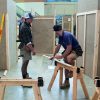
PSA member and NSW National Parks and Wildlife (NPWS) Officer Megan Bowden was the manager of the hut rebuilding project in NSW. The straightforwardness of the name of the project belies the complexity of what is actually required to fabricate a building in this part of the state. There’s no Bunnings nearby. And for most of the huts, there aren’t even sealed roads anywhere close. However, Ms Bowden’s passion and determination to ensure the job was done led her to select the right team of people to do it.
Over the five years it took to rebuild the huts, Ms Bowden and her team accessed archives of plans to ensure that the correct materials and methods were used to keep the huts authentically built.

“The skill that went into building these huts, making use of the materials around them and without modern technology always captivates me,” she told the ABC in June 2025.
Ms Bowden and the teams rebuilt 11 huts over a five-year period. Contemporary technology was used to rebuild them; however, maintaining the original aesthetics and construction methods were of prime importance throughout the process. The original use of the huts, and the additional materials and usage through time needs to be maintained as they are part of the record of history of the region. “They’re living museums”, Ms Bowden said.
The practical use of the survival huts is literally lifesaving. Across the whole of the high country, which spreads over large tracts of Victoria and NSW, there are more 200 survival huts. Dating as far back as the mid-1800s, the huts were built by surveyors, fishers, miners, cattle musterers, loggers, brumby drivers, hydrologists, meteorologists or keen bushwalking and ski groups. Some are made from flat, rounded river stones, others from cypress pine logs, and others from tin.
Ms Bowden met with PSA Assistant General Secretary Troy Wright and PSA Organiser Kim de Govrik in July this year, right in the middle of a Kosciuszko winter. She took them to Delaney’s Hut, built in 1905, where a fire was lit in the stone fireplace, and she explained what goes into to rebuilding the huts, and keeping them available for people who may need shelter from the harsh elements.
“Cultural heritage is just as important as the natural heritage in the nation parks,” Ms Bowden said. “The huts represent the different land uses of the park; from the timber-getters to the miners, to the stockmen, and to the construction of the Snowy Scheme. And they’ve all been built differently, and with quite different materials, from river stones to plain logs, and even mud.”
Mr Wright praised the work of members such as Ms Bowden.
“Our members in NSW National Parks and Wildlife are another significant example of why the Public Sector is so essential,” he said. “They are imaginative, innovative, passionate and extremely hard working people, doing crucial work for our society.”








 The Public Service Association of NSW and Community and Public Sector Union (SPSF Group) NSW Branch acknowledges the Traditional Custodians of the lands where we work and the places in which we live. We pay respect to Ancestors and Elders, past, present and future. We recognise the unique cultural and spiritual relationship and celebrate the contributions of first nations peoples to Australia.