




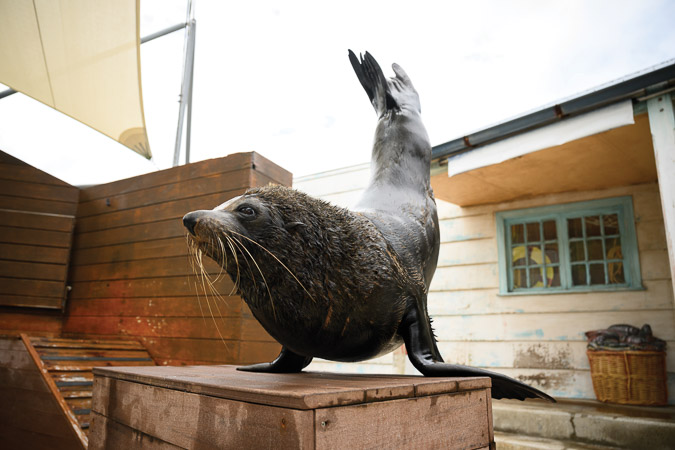
Often volunteering becomes ‘hope labour’.
In NSW it is calculated there are more than 4.3 million people who volunteer their time to help others, contributing at least 893.9 million hours.
Volunteering can build esteem, and the service it provides to society is invaluable. And, in times of desperate emergency, Australians are exceptional at giving their time and labour to very worthy causes.
However, our acceptance of volunteering has enabled some practices that exploit people’s willingness to donate their time and labour freely.
NSW government departments that utilise volunteer programs are largely ethical in their use of volunteers, and volunteers donating their time and labour to government departments are treated with utmost respect and enjoy the experience immensely. The areas where volunteer programs raise concerns for the PSA and our members are where volunteering has become an accepted component of the pathway to employment. Where employers have now structured particular areas to use volunteers as part of the day to day running of departments; where volunteers are doing the same type of work as employed workers.
Careers that now use volunteering as part of the pathway to gaining paid work include community services and social work, healthcare and allied health, education and training, zoos, conservation and environment, some areas of administration and business, and arts, culture, and heritage.
To gain employment in these fields, formal academic qualifications are almost always essential. And part of that education involves practical placement in workplaces, usually unpaid. However, this unpaid work is short term, and highly supervised, and gives students real-world experience in their chosen field. The NSW government is a major employer of the above-mentioned fields. And the PSA supports appropriate academic qualifications for roles which require a focused background.
Where people are volunteering their time and labour to a department with the aim of gaining a paid role, they can, unfortunately, be open to exploitation. That exploitation is not necessarily deliberate or devious; it is simply that volunteering has crept into certain career paths to the point where both employers and hopeful candidates for employment view volunteer work as an essential part of a CV.
Academics writing in industrial relations disciplines have labelled this phenomenon as ‘hope labour’. And where PSA members are reporting the use of hope labour is endemic in the state’s cultural institutions. PSA Assistant General Secretary Troy Wright said “The career path to becoming a paid worker in art galleries, museums, libraries and zoos now invariably involves volunteer work. And our members are telling us the work these people are volunteering to perform is the same work that paid workers are performing.”
Mr Wright went on to state “It has become ingrained in institutions in part due to neoliberal ideology amongst senior management. Hope labour has been rebranded as ‘entrepreneurialism’ or ‘investing in oneself,’ which makes the lack of pay feel like a personal choice rather than institutional exploitation.” Sadly, hope labour is a source of value that remains relatively unacknowledged, despite its disruptive impact on the labour market for cultural institutions. Free labour is not simply appropriated, but voluntarily offered and structured within business practices and social relations that are not directly managed and often go unquestioned.
Also, members report to the PSA that the internal culture of the state’s museums, galleries and libraries has changed. Much like the professions of law and medicine, it is difficult for people from a less affluent background to engage in periods of unpaid labour.
“Members and delegates need to be aware of this phenomenon in their workplaces,” said Mr Wright. “If volunteers are performing work that is a duty that a paid employee should be doing, report it to the union. An institution’s volunteer program can easily be an ongoing agenda item for Joint Consultative Committees.”










 The Public Service Association of NSW and Community and Public Sector Union (SPSF Group) NSW Branch acknowledges the Traditional Custodians of the lands where we work and the places in which we live. We pay respect to Ancestors and Elders, past, present and future. We recognise the unique cultural and spiritual relationship and celebrate the contributions of first nations peoples to Australia.

Leave a Comment
Your email address will not be published. Required fields are marked with *