

The PSA wants a better deal for Psychologists.
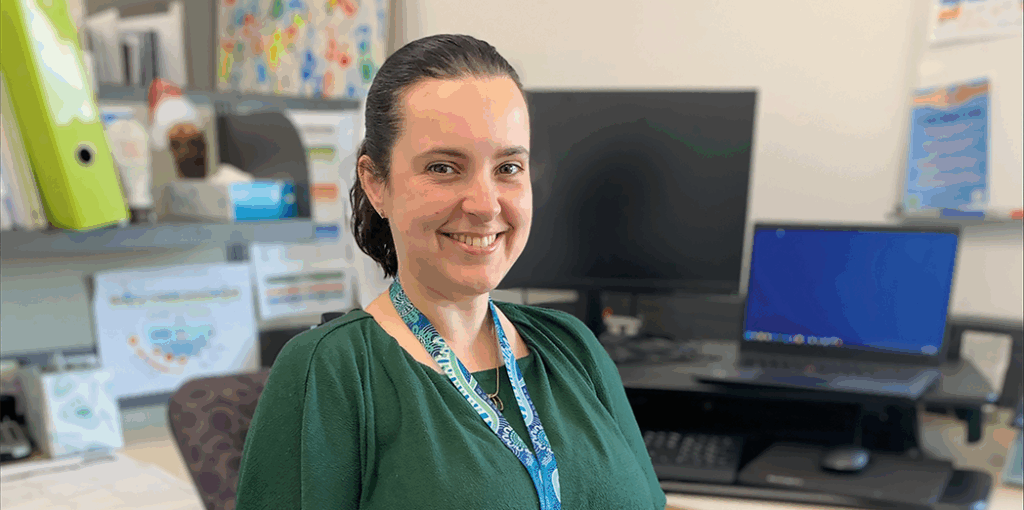
Rebekah Green is a Champion of the State, working on the with troubled children who have ended up in the state’s Youth Justice system.
“I am a Youth Justice Psychologist working in the community, so I provide psychological services to young people who are involved with Youth Justice outside the custodial setting,” she said. “Typically the most confronting aspects relate to learning about things that have happened in the past rather than in the moment.
“Reading the details of sexual offences and then discussing the offending behaviour with the young person, typically over a period of months while we complete assessment and treatment, can definitely be confronting.
“I would say that young people who have committed the most severe sexual and violent offences tend to be in custody rather than community, although anything that has resulted in Youth Justice involvement is inherently quite serious.
“Learning about the many ways that our young people themselves have been harmed, left vulnerable and failed by adults is always very confronting as well.”
Sam Ardasinski works with inmates as a Senior Psychologist with Corrective Services NSW (CSNSW). He admits it is unusual work.
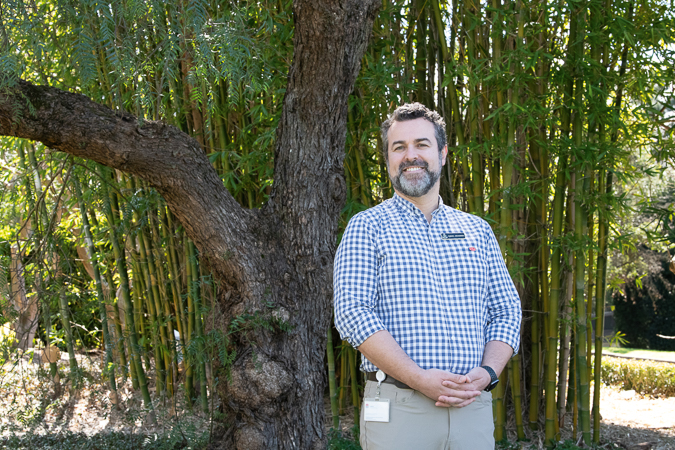
“There are not many jobs out there where you have to deal with a murderer in the morning and a child sex offender in the afternoon,” he said. “The material we have to digest in order to effectively work with this population can be quite harrowing to read, at times, and we need to maintain good boundaries and ensure we are not putting ourselves at risk of vicarious trauma.
“There is a great deal of trauma, which many offenders have been living with for many years and have never had the opportunity to address fully.
“There are also a great deal of undiagnosed and unmanaged mental health and neurodevelopmental disorders that impact on offenders’ lives.
“Helping offenders to deal with some of their basic needs, and getting these right, is sometimes the most critical thing. They need to feel that there is a place in society for them to enter into, once they have dealt with their issues, otherwise they can lose hope.”
Mr Ardasinski and Ms Green are two of the many Psychologists represented by the PSA CPSU NSW. Members work in a number of agencies, including Youth Justice, CSNSW, Police, Community Services and in the state’s schools.
Carol Smith (not her real name) works for Community Services with children.
“My role is a Psychologist in Community Services, working within Out of Home Care and the child protection space,” she said.
“I take referrals for assessment and psychological intervention from the casework team, most often for children and young people.
“Assessments may include diagnostic assessments, functional capacity assessments to support National Disability Insurance Scheme applications, and cognitive assessments.
“Intervention is typically therapy to address trauma symptoms or other mental health challenges a child may be experiencing. It could be anything from mood disorders, positive behaviour support for challenging behaviour, self-harm and suicidality, neurodevelopmental disorders, and many more.”
The PSA CPSU NSW is working for better pay and conditions for these vital workers.
“Our union knows how hard these members work, and we are trying to ensure the State Government knows it, too,” said PSA CPSU NSW General Secretary Stewart Little.
The union is currently pushing for a better classification structure for Psychologists in the Public Sector. This emerged when an increase to Teachers’ wages affected a long-standing agreement that School Psychologists’ wages equal those of School Counsellors, who are qualified teachers doing similar work. This is despite the fact Counsellors have often studied for a shorter time. The PSA fought for, and won, significant increases for School Psychologists.
That done, the PSA started to work on improving the salaries paid to other Psychologists working in the NSW Public Sector. Discussions commenced between the PSA and Public Sector Industrial Relations (PSIR) in May 2024. Then, in October that year, PSIR proposed a classification structure on a without prejudice basis. The structure did not include a proposal on the rates and the current Psychologist Award rates were utilised.
In April 2025, the PSA wrote to PSIR seeking interim increase of 4 per cent to keep parity with Psychologists who were paid under the clerk grades (including Treating Psychologists in NSWPF) and would receive an increase of 3 per cent as of 1 July 2025. On 2 June 2025, PSIR wrote to the PSA offering a further interim increase of 4 per cent. The PSA and PSIR are committed to expeditious negotiations, with meetings occurring fortnightly between representatives.
As it stands, a provisional Psychologist under the Crown Employees (Psychologists) Award is currently paid $79,592, which is $18,585 less than a provisional Psychologist employed as a School Psychologist, and $20,346 less than first-year Services and Programs Officers, Case Management Officers or Community Corrections Officers. The disparity between salary rates reaches a peak for generally registered psychologists in their fourth year of registration, with those employed under the Psychologists Award being paid $104,335 which is $40,382 less than an equivalently qualified School Psychologist.
“For people who have studied for at least six years and are required to deal with often harrowing subject matter, these rates are too low,” said Mr Little. “These agencies are haemorrhaging staff. Some teams have less than 50 per cent capacity.
“These members are on the frontline in the fight against domestic and family violence. Some of the additional funding to these areas needs to be directed to psychological services in order to achieve these worthwhile goals.”
Mr Ardasinski agrees.
“The new flexible working options are a good start in helping to attract good talent and keep them, but we need to pay our Psychologists at least as much as their counterparts in other workplaces or we will continue to lose good staff to other employers,” he said.
“I just want CSNSW to demonstrate that they value and respect the psychology workforce they have. So often we are asked to step in to deal with the hardcore, high-risk offenders in an effort to reduce their risk of serious re-offence, and it is a real challenge to overcome the feeling that we are not viewed with the respect our years of education and experience deserve, especially when other disciplines and middle managers that do not require our education and registration standards get paid more than we do.”
Ms Green from Youth Justice said she has to take on a wide variety of cases.
“Since there is only one Psychologist for the area and we work with such a complex group of clients; the role covers a broad range of areas including forensic psychology, disability and mental health,” she said. “Some common parts of my role include forensic assessments and reports, which involve identifying intervention needs to inform sentencing.”
Despite the often confronting issues she deals with, Ms Green enjoys her role.
“I have found working with our young people so interesting, challenging and fulfilling that I’ve now been in the role for more than six years,” she said. “Adolescents and young adults are my favourite client group to work with. Young people are so often not granted the space to safely express and make sense of their big, intense, complex thoughts and feelings, so simply providing that space can be an easy ‘win’.
“And when a young person demonstrates a real change in their thinking or a new coping skill after seeing me for treatment, especially when they can give themselves credit for their hard work in making that change, that is one of the most satisfying parts of this role.”
Ms Green has strategies to deal with the traumatic subjects she encounters at work.
“In relation to discussing sexual offences with clients, I do sometimes need to remind myself to stay regulated if it’s a particularly difficult subject,” she said. “Or I have to be mindful to use a matter-of-fact tone when providing information about sexual health and relationships.
“But I am typically more concerned about how to make the discussion safe and therapeutically beneficial to the client. There is almost always a huge amount of shame around the behaviour, as well as social stigma, denial, avoidance of responsibility, lack of knowledge, trauma and cultural taboos.
“I generally find the therapeutic skills much more challenging than dealing with the subject matter itself.”
Another Youth Justice Psychologist, Anne Lam, tries to separate work from home.
“My role is to remain calm and help them to regulate and problem solve,” she said. “I am well versed in being able to compartmentalise my work from my personal life so that I am able to manage this. I also focus on what I can do to assist the situation, rather than the troubles of the world.
“Dealing with the clients is actually the easy part of the job. The difficult part of the job is navigating our role within the custodial environment and navigating the operational environment.”
Mr Ardasinski admits working in his field “can be difficult at times”.
“Knowing that there are real people who have been affected by these real crimes makes it hard to persist with the hopefulness that intervention can make a difference,” he said. “But I try to keep in mind, as I also try to remind my clients, that these offenders are also real people who have real hopes and dreams.
“Human rights apply to everyone, criminal or not.”
Ms Smith admits that working with troubled children can be challenging.
“All the clients we work with have complex and heart-wrenching stories; they wouldn’t be involved with Communities and Justice if they didn’t,” she said. “Experiences such as witnessing extensive violence between parents, direct physical harm from caregivers or people around the home, sexual abuse by family members or others known to them, significant neglect, navigating parents or caregivers with unmanaged mental health difficulties or substance addictions, and the psychological harm from verbal abuse, threats, and witnessing significant distress in family members.
“These experiences shape the way a child’s brain wires, with a focus on survival over playing, learning and growing. This means children from such backgrounds are likely to have a sensitised threat response. Their brains have learned how to keep themselves as safe as possible through those experiences.
“Having a strong team around you helps significantly with managing the confronting content of our work, as does regular supervision and reflective practice.
“It is important to manage your own emotional reactions. Our role is to be a safe and supportive person for the children we see, so I draw a lot of resolve and steadiness from stepping into that space.
“They need us to be able to ‘hold’ their stories as they share them, as it signals safety which helps toward healing. Knowing the importance of the work we do helps, too.”
Ms Green knows how important she and her colleagues are for NSW.
“Considering the proportion of developmental disability, which is often undiagnosed, complex developmental trauma, mental health issues and complex challenging behaviours among Youth Justice clients, there is an enormous need for psychologists,” she said. “As a profession, we are highly trained and have a great amount of valuable knowledge and skills that can make a real difference for our young people.
“Our clients are very vulnerable and, at the same time, pose many risks to the community, and we see them at an age when changing the trajectory of their lives for the better is a real possibility.
“Not recognising the value in this role has far-reaching negative impacts.”










 The Public Service Association of NSW and Community and Public Sector Union (SPSF Group) NSW Branch acknowledges the Traditional Custodians of the lands where we work and the places in which we live. We pay respect to Ancestors and Elders, past, present and future. We recognise the unique cultural and spiritual relationship and celebrate the contributions of first nations peoples to Australia.