

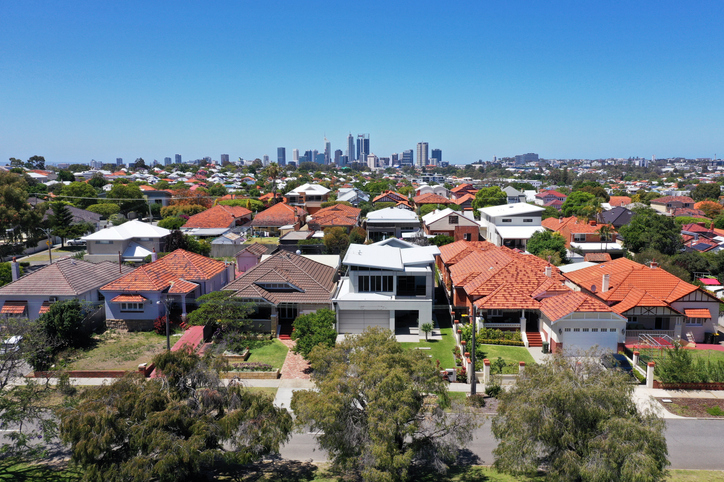
Herald opinion piece exposes long-running issue to the wider public.
In a recent article published in the Sydney Morning Herald, former NSW Building Commissioner David Chandler spoke in detail about the delivery of new dwellings to address the housing shortage in NSW, and in particular a sector of the market that is severely underrepresented: low-cost apartments; the kind of housing entry-level buyers can afford. The kind of housing that essential public sector workers can afford.
Mr Chandler, who was the NSW Building Commissioner from 2019 to 2024 was known for ‘‘getting things done’’. He oversaw some of the state’s high profile building issues – in particular the dangerously flawed Mascot Towers development which highlighted the shoddy building practices and poor inspection model which had occurred during Sydney’s building-boom of the 2000s. Mr Chandler also oversaw the introduction of the Project Remediate flammable cladding removal program and leading Construct NSW which was the key foundation of construction industry reforms.
In the Herald article, titled Ex-commissioner backs cheap units to tackle ‘market failure, published on 13 August 2026, Mr Chandler talks about the need to build high-volume, fast construction, affordable price point apartments that completely by-pass real-estate agent input. His model posits the delivery of 85 square meter, two-bedroom apartments for a final sale price of about $350,000, with a government-guarantee of completion, should the apartment be bought off-the-plan. The plan he suggests is the NSW government’s pattern book, launched last year, offering architectural plans for the grand price of $1. He added, ‘‘Entry level housing should be determined by what the purchaser can afford, rather than what real estate agents dictate is easier to sell.’’ Mr Chandler’s target for this project is 4000 apartments by the third year.
“The PSA applauds David Chandler,” said PSA General Secretary Stewart Little. “As a union representing the public servants of NSW, the majority of whom are not the public servants much maligned by conservative political parties and right-wing mainstream media, but the rank-and-file public servants who are essential to the running of the state, and who are struggling along with the rest of the state to keep up with the rising cost of living, to keep up with mortgage or rent payments, and to live within a sensible distance from where they work.
“We support David Chandler’s proposal. However, the plan is too sensible. It lacks marble benchtops and two ensuites. It lacks the up-sell that developers need to sweeten deals. The industry itself says it will not build affordable housing. It must be forced to include any affordable housing in developments; and even then, the affordable component has to time-out at some stage. We have some doubts about seeing developers get on board with Chandler’s proposal.
“The PSA has been arguing that there is only one developer who can do this. And who has a track record of building projects like this. The NSW government. David Chandler’s proposal is ripe for the NSW government. It uses the NSW government’s pattern book. It targets entry-level clients. And it lacks bourgeois accoutrements to add dollars to the sale-price. Chandler references in the Herald article that his proposal uses government-acquired land and enables cheaper building methods by using efficiencies such as bulk-buying repeatedly used materials, and building repeated architectural plans. This is a perfect plan for a state government building project.”
The government has previously had great success with similar projects. As far back as the early 20th century, the garden city of Dacyville in the eastern suburbs of Sydney. A project essentially only not repeated because it was interrupted by the First World War, and not picked up again. Later in the century the state Housing Commission and NSW Department of Public Works successfully completed public housing estates in Sydney and regional centres. Conservative governments established large-scale sell-offs, promoting home ownership; but also selling off government land simply because it is ideologically neo-liberal and small-government. Public housing stock has become so harmfully reduced that Homes NSW is no longer a provider of housing, but a provider of welfare.
“Projects such as David Chandler’s are now essential,” said Mr Little. “Whether the people of NSW wish to purchase housing, or rent housing at a reasonable price, within a reasonable distance from their work, it should be a simple right. And a right not only for the wealthy. A right for workers as well. And the only way we can ensure that right is by the NSW government stepping in and taking responsibility to build the housing that developers will not build.
“Let’s hope the Housing Minister and the Premier get on the phone to David Chandler. And Homes NSW and the NSW Department of Public Works do what their department names suggest: Work on Public Homes for the people of NSW.”








 The Public Service Association of NSW and Community and Public Sector Union (SPSF Group) NSW Branch acknowledges the Traditional Custodians of the lands where we work and the places in which we live. We pay respect to Ancestors and Elders, past, present and future. We recognise the unique cultural and spiritual relationship and celebrate the contributions of first nations peoples to Australia.