

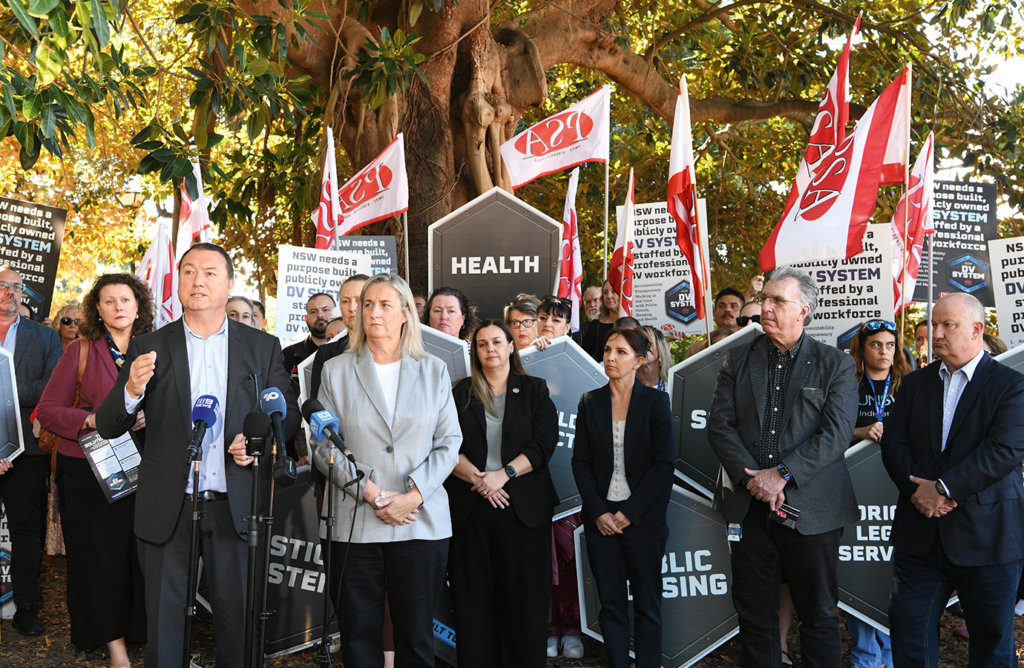
Union takes action on a nation-wide crisis.
The PSA CPSU NSW has launched a campaign to put the public sector in the centre of the state’s response to the rising levels of domestic violence (DV) that blight NSW. The campaign’s core message is simple: domestic violence needs public services.
“It is not about kicking the non-government sector out of the space,” said PSA CPSU NSW General Secretary Stewart Little. “It is about the State Government taking a leading role in coordinating the many groups, both government and non-government, that people turn to when they experience violence in the home.”
The Western Sydney, Nepean and Blue Mountains Family Violence Service, based in Mount Druitt, is the template upon which the union is basing its campaign. Mr Little said it serves as “a one-stop shop” in the area.
“Such a service should be available all over the state,” he said. “We will argue for a fundamental shift away from outsourced service models toward a publicly run system integrated within government.”
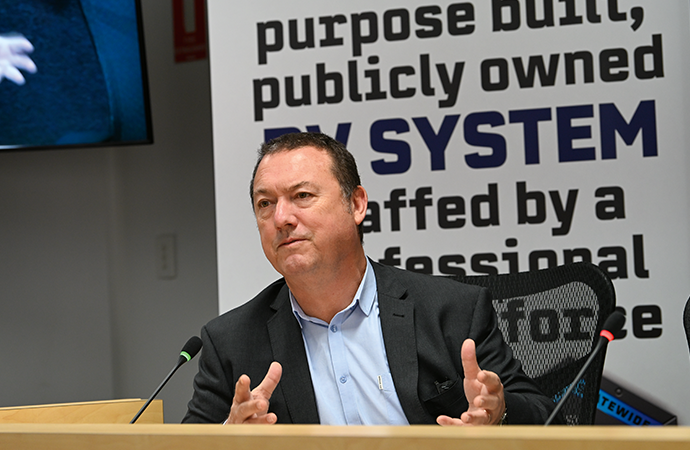
At the heart of the campaign is the claim that domestic violence, not just in NSW, but all of Australia, constitutes a national crisis that is not being adequately addressed by current arrangements. The PSA CPSU NSW highlighted that more than 120,000 assaults each year are related to domestic violence, accounting for over half of all assaults nationwide, and that women are still being killed regularly by current or former partners.
In NSW, police receive a DV-related call every three minutes.
These figures are used to frame the campaign’s central argument: that despite billions of dollars in government spending, the system is failing victim-survivors because it is fragmented, inconsistent, and largely outsourced to non-government organisations.
The PSA CPSU NSW contends that the prevailing model, where services are delivered by a patchwork of community organisations funded through short-term grants, creates inequity and instability.
According to the campaign, access to support often depends on geography, leading to what Mr Little described as a “postcode lottery”. Some victim-survivors receive comprehensive, long-term assistance, while others encounter waiting lists or receive only minimal support. Where a person lives will determine what non-government organisation will help them.
The union argues that outsourcing safety-critical services dilutes accountability, encapsulated in its slogan: “When safety is outsourced, accountability is outsourced.”
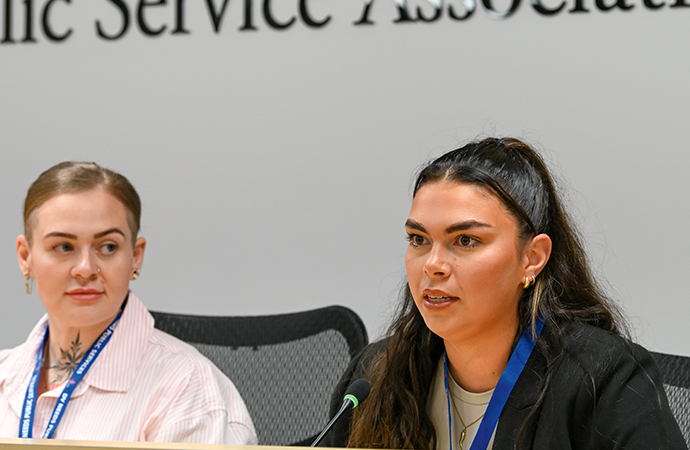
The campaign was launched at the end of the union’s second one-day summit on DV, which included presentations from victim-survivors Bindii Fletcher and Danielle Sharpe and Nepean and Blue Mountains Family Violence Service employees Dilsat Seyis and Julie Grigoriadis.
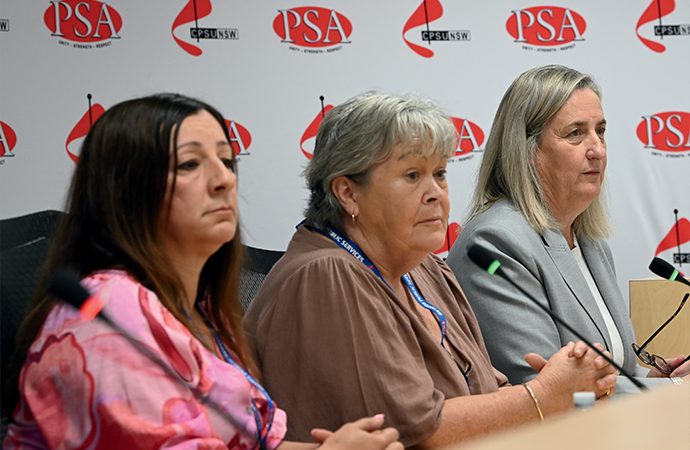
The PSA CPSU NSW campaign proposes a structural overhaul centred on embedding DV services within the public sector.
One of its primary demands is the creation of a dedicated, government-run domestic violence service that would operate alongside existing core services such as policing, housing, health, and child protection.
“Everyone should have access to their own Mount Druitt-style government service,” said PSA CPSU NSW President Nicole Jess.
The campaign outlines five key reforms, including building public-sector DV services, guaranteeing long-term funding, integrating systems across agencies, strengthening oversight, and developing a skilled workforce.
“These reforms are intended to produce a coordinated system in which victim-survivors can access consistent, end-to-end support without repeatedly navigating disconnected services,” said Ms Jess.
A major policy focus is the expansion of integrated, government-led service models already operating in parts of NSW. The PSA points to the Mount Druitt service as a “gold standard”, as it can provide long-term, continuous support to clients, sometimes over several years, rather than NGOs, which come and go.
The campaign proposes replicating this model across at least 12 additional regions, arguing that publicly run services offer stability and continuity that short-term NGO contracts cannot match. This approach is also linked to broader goals of workforce development, including creating secure, well-trained public sector roles in the DV field.
Another distinctive element of the campaign is its emphasis on perpetrator intervention. The PSA CPSU NSW argues that the current system inadequately addresses offender behaviour, noting that many individuals arrested for domestic violence spend extended periods in custody without receiving rehabilitation programs.
“Inmates on remand for DV offences are not compelled to undertake programs,” said Ms Jess, herself a Senior Corrections Officer. “Instead they spend months on remand, often stewing and plotting revenge on the partner.”
By integrating Corrective Services NSW into the broader DFV response, the campaign seeks to reduce recidivism and prevent further harm after offenders are released.
The PSA CPSU NSW campaign also draws on specific incidents to illustrate systemic failures, particularly with outsourcing of government services. For example, the union referenced the killing of Molly Ticehurst in the state’s central west, highlighting delays in the installation of safety measures by a private provider as evidence of the risks associated with outsourced services.
Despite opposition from some NGOs, the PSA campaign has succeeded in elevating public discussion about the structure of DV services in NSW. By framing domestic violence as a systemic public safety issue rather than solely a social service concern, the campaign challenges policymakers to reconsider long-standing assumptions about service delivery. It also aligns with broader debates about the role of government versus non-government providers in essential services, particularly in areas where failure can have life-or-death consequences.
“The PSA’s DV campaign represents a bold and controversial attempt to transform the sector,” said Mr Little. “We are convincing the people of our state that DV services should be publicly delivered, integrated, and accountable.
“The campaign has played a critical role in reshaping policy conversations and highlighting the urgent need for effective, coordinated responses to domestic violence in NSW.”












 The Public Service Association of NSW and Community and Public Sector Union (SPSF Group) NSW Branch acknowledges the Traditional Custodians of the lands where we work and the places in which we live. We pay respect to Ancestors and Elders, past, present and future. We recognise the unique cultural and spiritual relationship and celebrate the contributions of first nations peoples to Australia.