


The 2026 PSA CPSU NSW Annual Conference looked at how our state will operate in the future.
The 2026 Annual Conference on 28, and 29 May looked into the future of the PSA CPSU NSW and the world in which its members will work. The conference saw discussion on two ground-breaking campaigns that will affect not only union members, but will aim to improve the lives of all people in NSW.
The theme of Conference 2026 was Facing the Future. And at the beginning of the second half of this decade, is an extremely fitting theme. The union’s members are on the front lines of major issues facing the people of NSW, and are both personally experiencing these issues and working in the departments which must deal with them. The PSA CPSU NSW’s 2026 campaigns go straight to the core of how government can address the most serious issues: housing, job insecurity influenced by technology, and domestic and family violence.
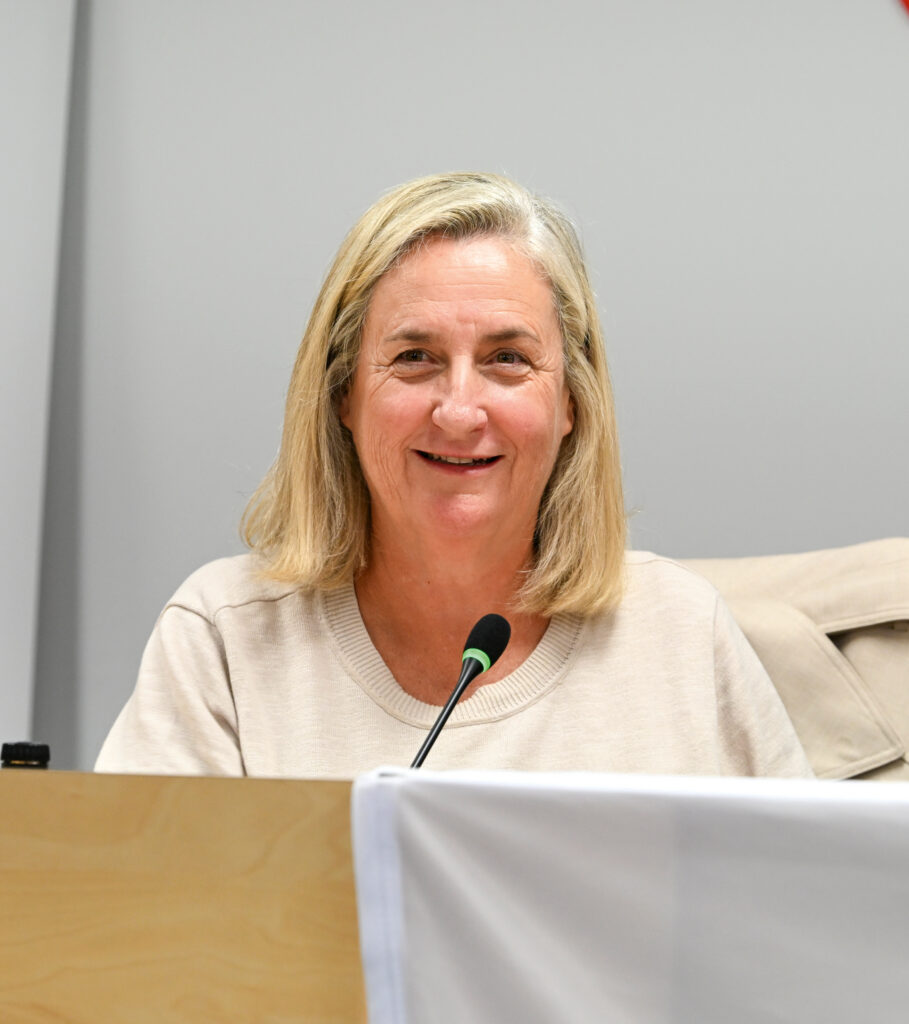
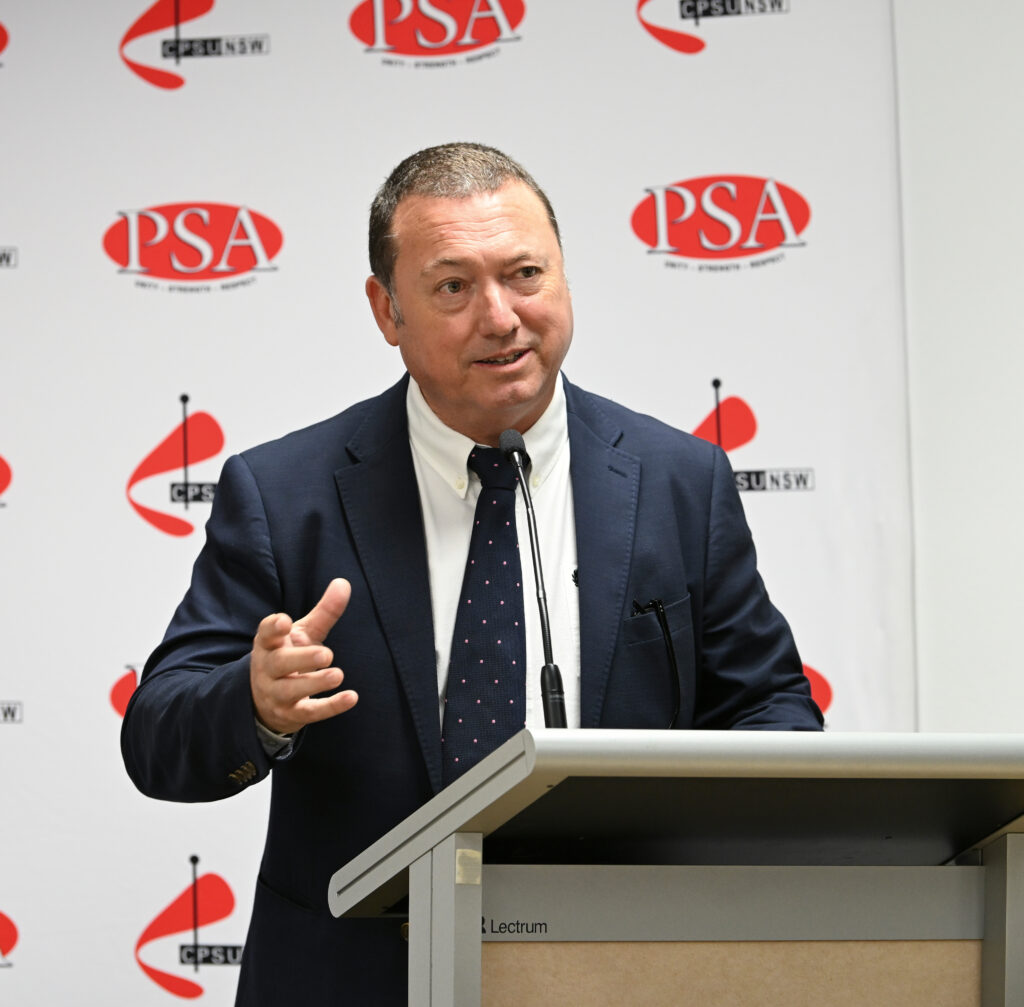
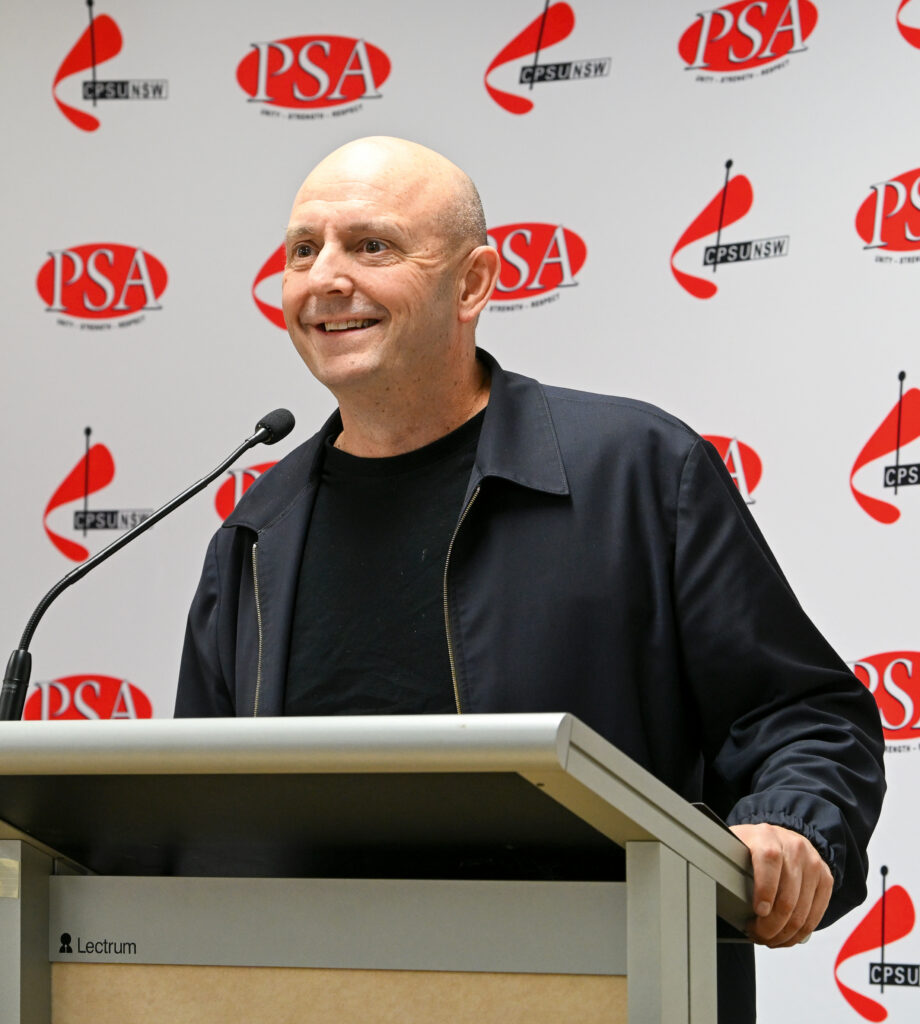

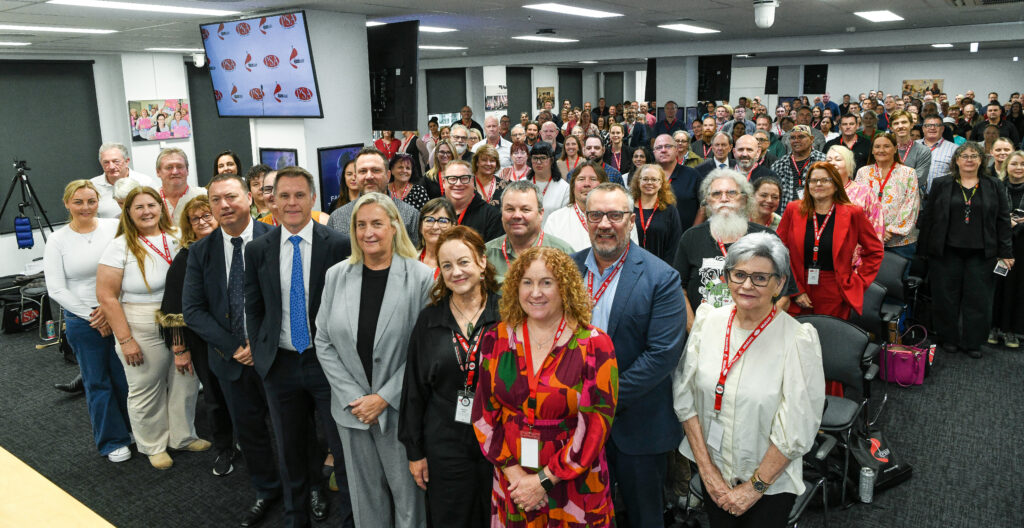
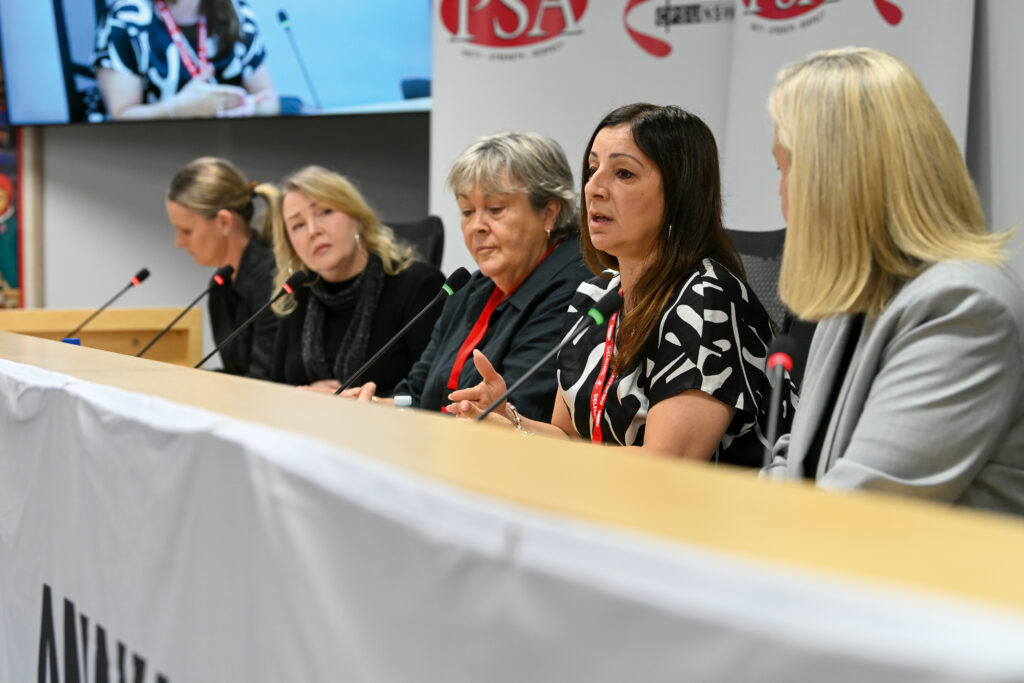
“Conference gave the PSA CPSU NSW the chance to listen to the delegates who represent our membership and identify areas where the union and membership can work to significantly change things for the better. Much better,” said the union’s General Secretary Stewart Little. “The strength of the union, and the knowledge and experience of each of us collectively led us to activate campaigns that can achieve great outcomes, and Conference offers an opportunity to hear from experts in their fields, and the experts living and working in our communities. The membership.”
Country Conference on the afternoon of 27 May preceded the Annual Conference. It introduced the theme of Conference 2026, Facing the Future, to regional members, who are profoundly affected by changes facing the state’s workers.
Members were welcomed by the PSA CPSU NSW Aboriginal Liaison Officer Ricky Walford, who reminded us that welcome to country is literally a unifying action, not a divisive one as suggested recently by conservative pundits and by hecklers at Anzac Day ceremonies.
“You’re Australian, I’m Australian, it just happens that my ancestors have had this protocol in place for over 40,000 years”, Mr Walford said.
Guest speaker Janelle Saffin, NSW Minister for Recovery, North Coast and Small Business, brought a positive and hopeful voice for the regions, talking about changes in preparedness for the state’s regional areas; and that the future in country NSW needs to be about readiness for natural disasters, and public servants are crucial to this. Ms Saffin said the government “has to mitigate for the risks before they strike and ensure that we’re there for the long-haul”.
Delegates Anna Thomas and David Cox, from State Emergency Services talked about the essential services that employed staff at the SES provide, ensuring that our volunteers have everything they need, when they need it. Ms Thomas also stated “we are really, really grateful to everyone here and at the PSA, and we are proud to stand together with you all.” She went on to say that she would love to see delegates and members “in orange” in reference to the orange overalls SES volunteers wear.
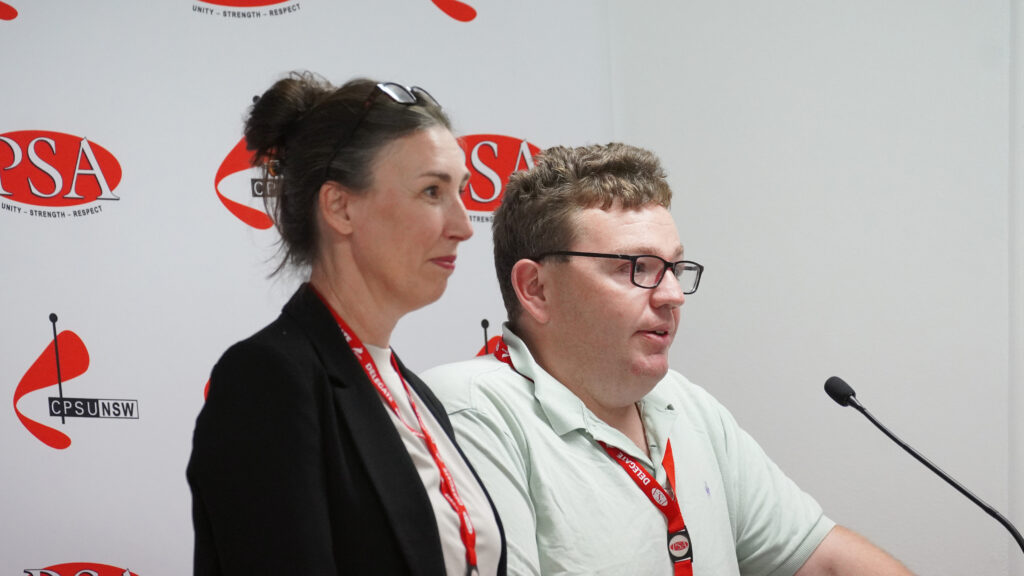
Regional membership and recruitment were presented by Glenn Duncan, Senior Organiser and the PSA’s Research Officer Lara Westwood. Attendees learned the union’s membership, in terms of geographical distribution, is almost exactly half metropolitan-based, and half regionally based. Retention rates in the regions are much stronger though, suggesting that PSA CPSU NSW country members hang on to their membership through thick and thin.
Richard Denniss from The Australia Institute gave members a common-sense, political-spin-free talk on Australian economics. PSA CPSU NSW President Nicole Jess said that if Mr Denniss was her economics teacher, she would have passed with flying colours. Mr Denniss, whose presentation came with a language warning, which some delegates no doubt enjoyed, reminded members that “we are not in a housing crisis, we are in a taxation crisis, and certain groups are doing better than fine in the current economic environment. Just not the majority of Australians.
“What if the government just built more houses?” Mr Denniss said. “And what if the value of those houses went up and the government made some money off them? And if the value went down, then good, we need the price of housing to go down anyway.”
Then Mr Denniss said what the PSA has been saying for years, “What if the public sector was actually the solution to the problem?”
After a welcome to country from long-time associate of the PSA, Nathan Moran, Chief Executive of the Metropolitan Local Aboriginal Land Council, Mr Little gave the delegates a summary of what has been a very busy year for the union.
“I’ve never felt this positive about the public sector. I really haven’t,” Mr Little told the delegates. “We’ve got huge challenges in front of us, but I know we will meet them head on, and together we will grow our great union, with unity, strength and respect.”
Nicole Jess, President, gave delegates a welcome to conference, commenting of course on the state’s win at the State of Original the night before. On the theme of the Conference, Facing the Future, Ms Jess said “The future isn’t something that crashes over us, it is something we meet, determined, informed, and organised, together.”
NSW Premier Chris Minns addressed the membership for the fifth occasion on the first full day of Annual Conference. The Premier formally assured the membership that the government would honour its payment of $1000 cost-of-living allowance, negotiated by the PSA two years ago when the union got rid of the public service wages cap.
The Premier went on to say though that “The PSA doesn’t pull any punches, and we’ve been on the receiving end of some tough delegates, and some tough rhetoric.
“But I expect nothing less from a union that cares about its members and wants to make the state better.”
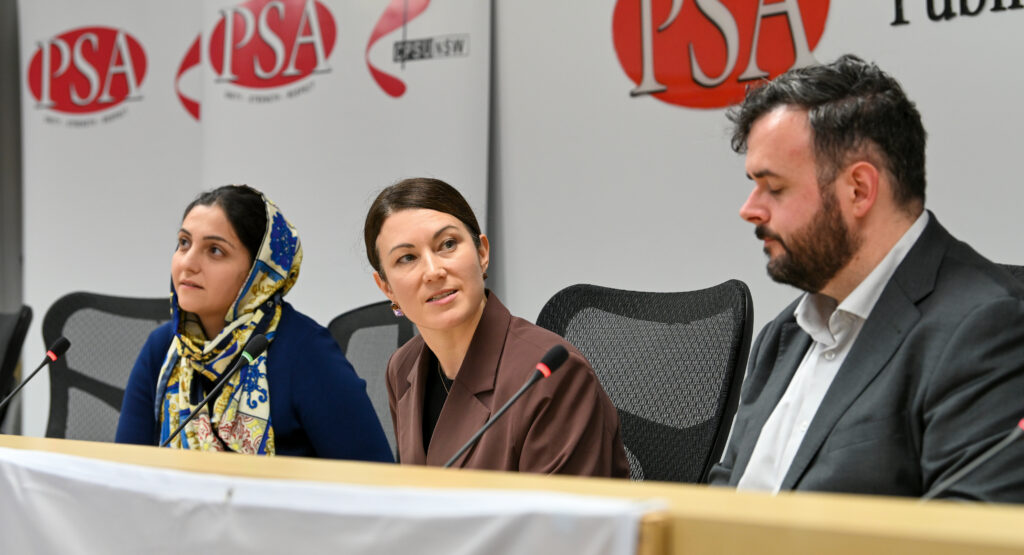
The PSA CPSU NSW’s DV Needs Public Services campaign was launched on 4 May 2026, and made headlines across the state and the nation. An update on the campaign, and background behind its significance was presented by a panel which included Dilsat Seyis and Julie-Ann Grigoriadis, both from the Department of Communities and Justice’s Western Sydney, Nepean and Blue Mountains Family Violence Service.
Ms Grigoriadis said, “It’s great not only to support a woman leaving violence, but also her kids. Though childcare, counselling, and liaising with everyone in all the other agencies we work with.”
Mr Little said this campaign shows the PSA CPSU NSW has a vital role in the state, not only on behalf of its members but for anyone experiencing violence in the home.
“We are doing this because it is the right thing to do,” he said. “If successful, it will save lives.”
Members were treated to a glimpse into what life, and work, is like for public servants in Donald Trump’s USA at present when Assistant General Secretary Troy Wright spoke with Elissa McBride, from the American Federation of State, County and Municipal Employees’ union.
Public Sector Cuts: The American Experience provided the delegates with a frank, but surprisingly positive talk from Ms McBride. Although job cuts and cuts to just about everything in the public service are being experienced by civil servants in the US, they are fighting back, and achieving wins in courts across the nation.
“We do have programs like Medicare and Medicaid that, under Trump’s administration, are being slashed, but we are fighting, and we have a lot of members who are doing accountability action with their elected officials.” Ms McBride said. “Members are lobbying, sending emails, making phone calls, and attending No Kings demonstrations.
“But we are really looking forward to getting back to the polls again and making a change that way.”
Nathan Keats from McNally Jones Staff and Kym Ward, PSA CPSU NSW’s manager of member services presented the next giant campaign for NSW’s public servants, the Salaries Case.
Despite Mr Keats calm demeanour, this is a serious and significant campaign by the PSA CPSU NSW. He told delegates “We are going for a three-year deal, and asking for a 25 per cent pay rise for members.”
Unsurprisingly, this was popular with attendees.
A panel of experts tackled the next issue: Artificial Intelligence is Here: What Does it Mean in the Public Sector?
Dr Ziba Gandomkar Senior, Lecturer at the University of Sydney; Joseph Mitchell from the Australian Council of Trade Unions (ACTU); Laura Christie, Deputy Secretary of Digital NSW at the NSW Department of Customer Service; and the PSA’s Assistant General Secretary Troy Wright were introduced by Robocop – or at least a bloody and foretelling scene from the 1987 film by Paul Verhoeven.
Mr Wright explained to the delegates that movie director Verhoeven slipped into cinemas and our consciousness a gory action flick, but it has turned out to be a highly prophetic and politically smart piece of cinema that warns us of greed-driven privatisation, over-reliance of untested technology, and the thin line between organised crime and corporatism. Issues AI could be ripe for.
Turning the topic to a much brighter possibility concerning AI, the ACTU’s Joseph Mitchell told us that “there is absolutely a pro-worker future with AI.” He went on to say that “there isn’t a single AI tool out there today that can beat the passion, creativity, judgement, focus, expertise or empathy of working people.”
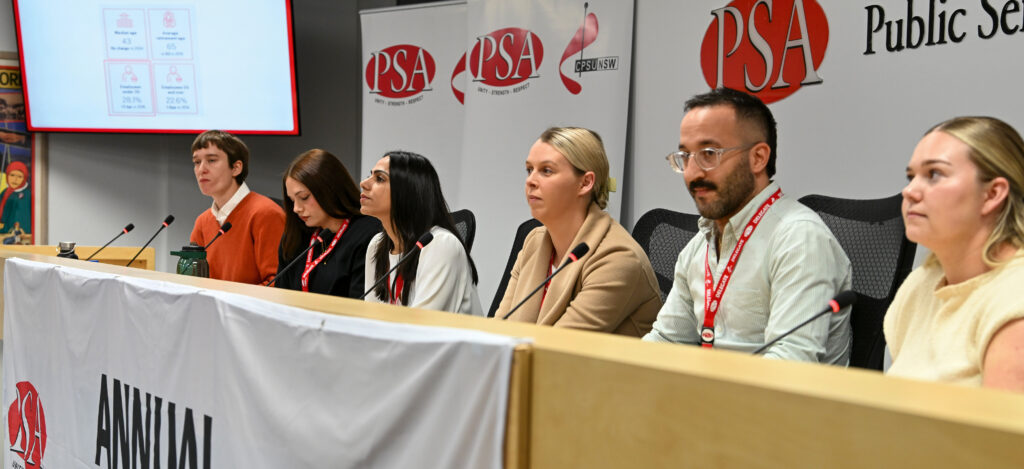
To round out the full day of conference, four young delegates, Brooke Blatch from Child Protection, Lovdeep Singh from SafeWork; Rachel Summers from Corrective Services; and James Ricupito from Art Gallery of NSW discussed the Future of Unionism.
Ms Summers made the heartening statement that growing up in regional NSW, her father was a nightshift coal miner, and that belonging to union “was not an abstract thing. The reason he [her father] was coming home every morning to make breakfast for us was because he was part of a union that made sure he had a safe workplace. So when I joined the workforce, the first thing I did was join the union. In my case, the PSA.”
On the final day of Conference, the session began with a great video recap of the Country Conference, and the first day of Annual Conference.
There was no light session to start the day. Troy Wright, PSA CPSU NSW’s Assistant General Secretary presented a talk about his trip to Myanmar, sponsored by APHEDA. Democracy in Myanmar was not a cheerful presentation. However, it was an eye-opening insight into how fortunate Australians are to have a democratic structure in which to live, and that there are ways unionists can help their comrades in southeast Asia.
One of the most topical subjects was presented by Rose Jackson, NSW Minister for Housing, Homelessness and Water when the minister attended Conference to talk to delegates about Affordable Housing for Public Sector Workers.
With the launch of the PSA CPSU NSW’s report on housing coinciding with the 2026 Annual Conference, the panel discussing Challenges in Affordable Housing was Anna Patty, PSA Principal Policy Analyst; Bernadette McMahon from Homes NSW, and Hal Pawson, Emeritus Professor of Housing from University of NSW.
“The PSA’s report is undoubtedly going to be a much-quoted source in the discussions surrounding the housing crisis in NSW,” said Mr Little.
In the forward to PSA Affordable Housing Survey Results and Policy Options 2026, the union’s General Secretary stated that the more than 5000 public servants who responded to the survey said they are either terrified about retirement, are one rent increase, one interest rate rise or one relationship breakdown away from homelessness, have already experienced homelessness, and, worryingly, are staying in violent relationships to avoid homelessness.
“Many told us they are skipping meals, delaying medical care, commuting hours each day, trapped in unsafe housing situations or losing hope of ever owning a home,” Mr Little said. “These are the people who are working in services committed to preventing the situations that the workers are now finding themselves in.”
Mr Little finished his statement by saying “I am determined to make this our case and make sure our members’ voices are heard. We owe that to the workers who shared their experiences with courage and honesty. And we owe it to the wider community that depends so much on a public sector workforce.”
He added that, like the campaign on domestic violence, the union’s focus on housing will benefit far more people than simply those with a PSA CPSU NSW membership card.
“Unions are about improving society,” he said. “This campaign will see more people able to afford homes and fewer people on the street, couch-surfing or paying a vast percentage of their earnings on a place to live.
“The government can ill-afford to ignore the PSA’s survey. The recommendations are there. And our members are ready to act on them.
“Conference this year gave us a unique opportunity to bring our expertise and passion as unionists to the forefront for a better state for all.
“Facing the future will be a much more optimistic endeavour with a strong union at the helm.”












 The Public Service Association of NSW and Community and Public Sector Union (SPSF Group) NSW Branch acknowledges the Traditional Custodians of the lands where we work and the places in which we live. We pay respect to Ancestors and Elders, past, present and future. We recognise the unique cultural and spiritual relationship and celebrate the contributions of first nations peoples to Australia.